- Identify the spilled product
- Document the affected footprint
- Verify sound repair substrate
Reddit discussions identify questions; technical guidance comes from the linked primary sources. This article is not a site inspection or an engineered specification. How we research.
Start with the container, not the repair aisle
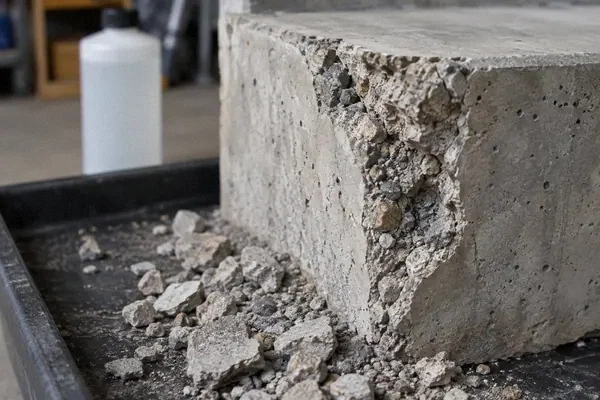
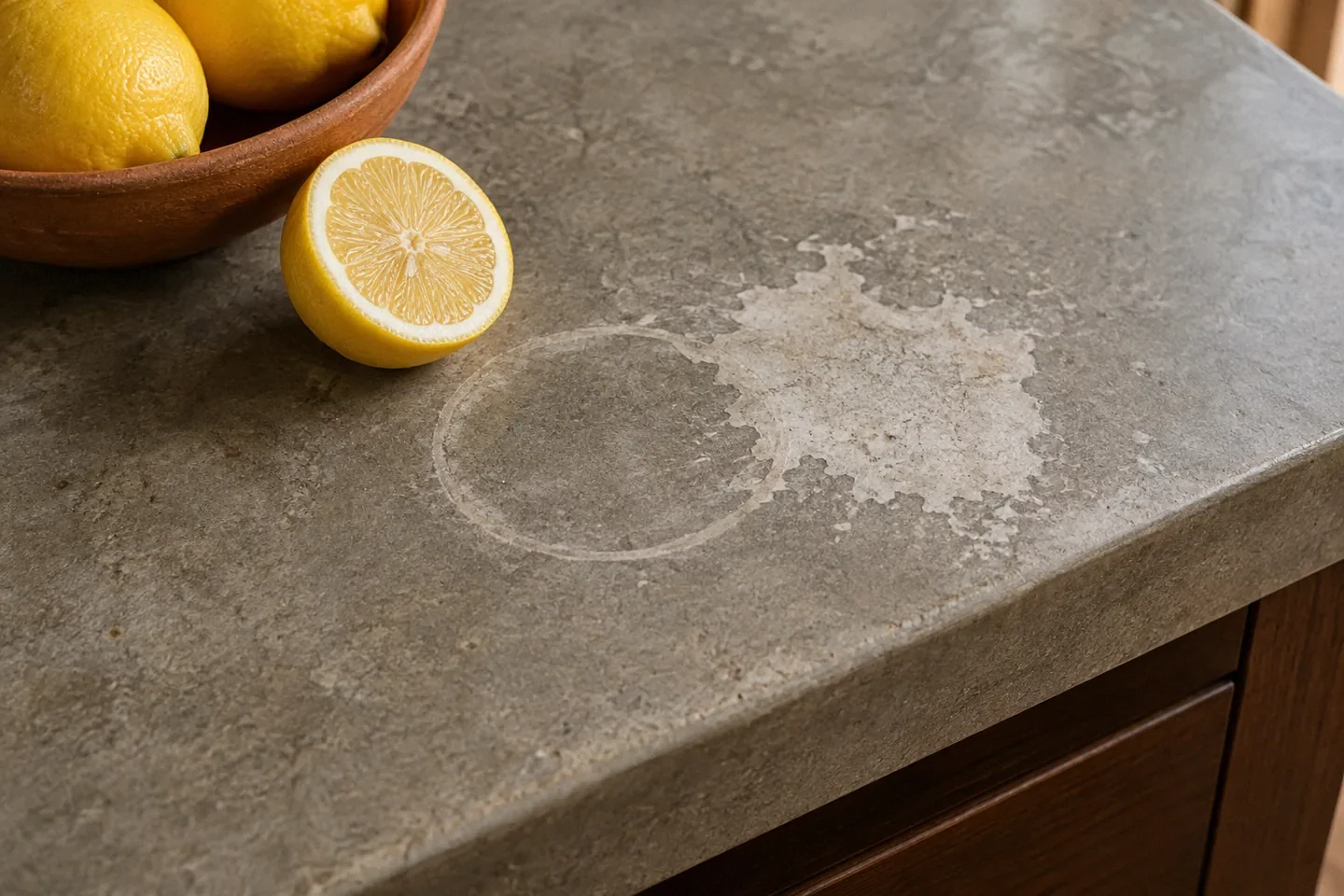
A rust remover, cleaning chemical or other acidic product can leave a concrete area looking etched, discolored or deteriorated. The useful first document is the spilled product's label and safety data sheet. Different products have different compositions and handling requirements, so the word acid does not provide enough information for cleanup or repair.
A Reddit homeowner linked driveway damage to an acid-based rust remover and asked about resurfacing. That is a plausible history to investigate, not proof that every damaged patch has the same cause. The thread is useful for understanding the repair question, but its product recommendations do not establish suitability for another spill.
If a spill is recent or material remains, follow the product's emergency and handling instructions and seek appropriate assistance where needed. This article concerns evaluating the concrete and planning repair after the immediate incident is managed; it is not a chemical-response procedure.
Preserve the history of what happened
Record the product, approximate date, area affected and anything used afterward. Include whether the surface had a sealer or decorative finish. If several cleaners were tried, list them rather than omitting an unsuccessful attempt. The next contractor needs to know what may remain on or within the affected area.
Photograph the spill footprint and surrounding concrete. Note runoff paths and whether liquid reached a joint, adjacent material or a planted area. Do not assume the visible discoloration marks the full extent of altered concrete. The evaluator may need to examine beyond the obvious boundary.
Separate what you know from what you infer. “Rust remover dripped here before the flaking appeared” is a useful fact. “The entire slab is chemically ruined” requires evidence. A precise history helps avoid both underreaction and an unnecessary whole-slab replacement assumption.
Identify which layer changed
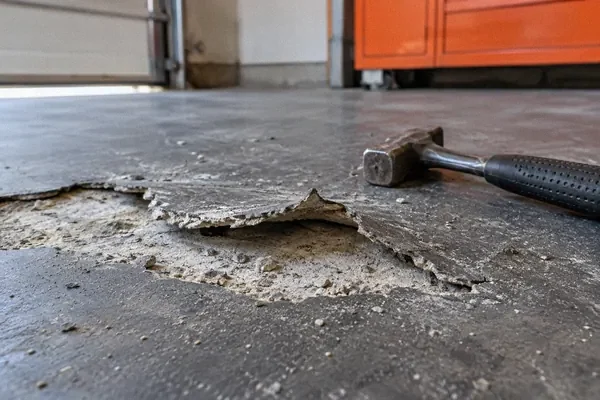
The visible damage may involve an existing coating, the concrete surface or both. Ask the contractor to distinguish those possibilities. A coating repair and removal of unsound concrete are different tasks, even if both begin with an unattractive patch.
Record whether the area is simply a different color, has lost texture, exposes aggregate or sheds material during ordinary use. These observations help frame the assessment. Do not perform aggressive scratch or acid tests yourself to determine strength; they can enlarge the damage and complicate the evidence.
If the slab has a structural role, exposed reinforcement or deep deterioration, the evaluation must reflect that significance. A thin cosmetic dressing should not be offered as a substitute for a required structural assessment. Make the use of the slab clear when requesting an inspection.
Cleanup completion is not substrate acceptance
A surface may look clean after rinsing but still be unsuitable for a particular repair. Ask what condition the repair manufacturer requires and how the installer will verify it. Do not assume that an improvised neutralization step establishes compatibility with the next material.
The ARDEX CD technical data requires a suitable sound substrate and identifies contaminants and weak material as preparation concerns. That is one system's guidance, not an endorsement for every chemically damaged area. The installer should select a product only after the condition and required preparation are understood.
For any cleaning product used during restoration, consult its actual substrate limits. PROSOCO's concrete-cleaner information illustrates that cleaners are formulated for particular tasks. A product described as a concrete cleaner is not automatically a remedy for damage from another chemical.
Define the repair boundary
A localized patch needs a boundary in suitable material, not merely a border around the darkest stain. Ask how the contractor will determine the area and depth to be treated. If removal exposes additional damage, the scope should explain how the work and price will be revised.
Discuss the expected finish. A local patch can remain visible because its texture and color differ from weathered concrete. A larger dressing may improve visual continuity, but it adds preparation and may require treatment of the entire panel or area. Those options should be compared as distinct scopes.
Do not let a cosmetic goal override joint function. If the affected area crosses an existing joint, ask how the repair will preserve the required movement detail. Covering every line to create a smooth appearance can leave an unsuitable system.
Questions for a repair proposal
- What product was spilled, and what cleanup has occurred?
- Is the changed layer a coating, concrete or both?
- How will the extent of unsound material be established?
- What substrate condition does the repair system require?
- How will remaining contamination or incompatibility be addressed?
- What will the patch look like after curing and wetting?
- What happens if additional damage is found during preparation?
These questions turn a generic resurfacing estimate into a response to the actual incident. They also help separate necessary preparation from optional cosmetic expansion of the work.
A hypothetical vehicle-maintenance spill
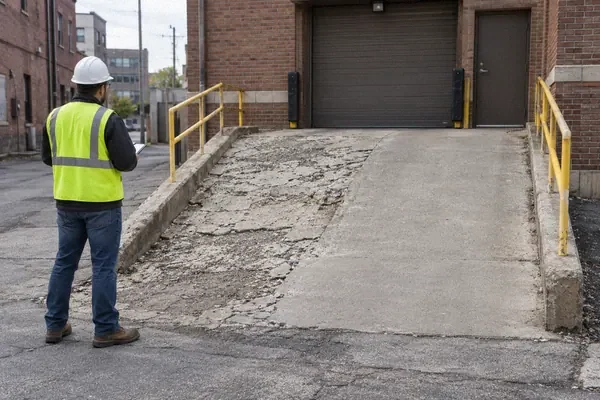
Imagine a hypothetical driveway where a chemical used beneath a vehicle dripped into a small area. The owner later notices flaking and buys a thin dressing. Before application, a contractor reviews the chemical record and finds that the visible patch does not define the entire area requiring preparation.
The owner now has a choice between a visible localized repair and a broader suitable finish after the substrate is prepared. The product purchase did not determine the repair; the condition did. If the assessment instead finds only damage to an old coating, the scope may be narrower. Both outcomes depend on identifying the affected layer rather than assuming the worst or the simplest explanation.
Keep the incident record with the repair
Save the chemical information, photographs, preparation description and repair product data. Future coating work may depend on that history. The next step should be a defined substrate assessment and compatible repair plan, not repeated chemical experiments. A carefully documented local incident is easier to address than a surface altered by several undocumented attempts to make it look normal again.
Related questions
Should I neutralize every acid spill with the same household product?
No universal recipe is appropriate. Follow the spilled product's safety information and obtain suitable guidance for the actual material and exposure.
Can resurfacer hide acid damage permanently?
Only a suitable prepared substrate can support the proposed system. The damaged extent and any remaining contamination must be addressed first.
Research references
- primary · search-excerpt
ARDEX CD Technical Data - primary · search-excerpt
PROSOCO Light Duty Concrete Cleaner - reddit · search-excerpt
Spalling driveway