- Record the visible symptom
- Identify missing evidence
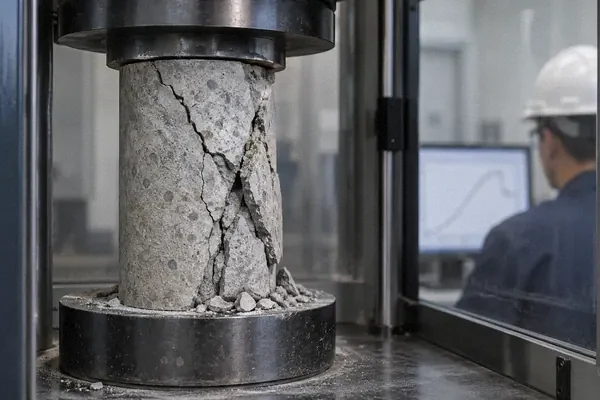
- Choose a qualified assessment
Reddit discussions identify questions; technical guidance comes from the linked primary sources. This article is not a site inspection or an engineered specification. How we research.
Define the question you need answered
“Is this concrete okay?” is too broad. Ask whether your concern involves appearance, a departure from the agreed finish, water behavior, movement or the ability to support the intended use. Different questions need different evidence and sometimes different professionals.
If the concern involves a structural element or an immediate safety question, obtain prompt on-site professional direction. Do not rely on reassurance from strangers because the surface appears ordinary. Conversely, an unattractive photograph does not automatically establish that the structure must be demolished.
A Reddit post showing a disputed concrete pour drew sharply conflicting opinions. That disagreement is a useful reminder of the limits of remote interpretation, not evidence that one anonymous conclusion should govern your project.
Build a photograph set that supports an inspection
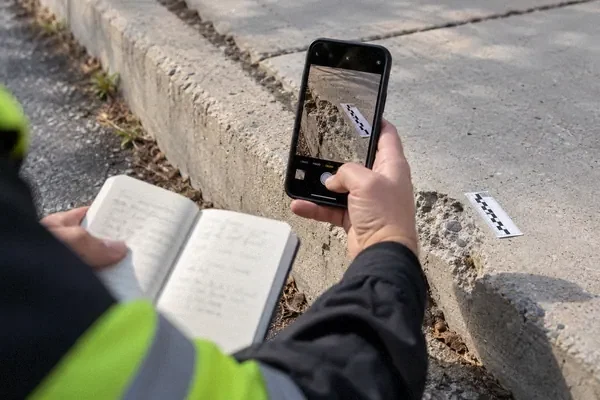
Take a wide view showing the element in its surroundings, then closer views of the concern. Include a location map and a scale where safe. Record the date, whether the surface was wet and whether the photograph was taken before or after any attempted correction.
Do not crop away the adjoining structure when its relationship may matter. A small void, edge or joint can look very different when the full element is visible. Keep original images and label any annotations as your own.
Where change over time is part of the concern, repeat photographs from the same position when practical. A sequence can document an observation, but it still does not determine its cause. Avoid making precise measurements from perspective-distorted images when actual professional measurement is needed.
Separate visible facts from hidden questions
| A photograph may help show | Additional evidence may be needed for |
|---|---|
| Location and appearance of a surface condition | Its cause and consequence |
| A visible edge at one point | Thickness elsewhere in the slab |
| Exposed reinforcement in one area | The complete reinforcement arrangement |
| Water present at a recorded time | Design compliance and drainage performance |
| A changed surface after repair | The adequacy of concealed corrective work |
The table does not make photographs unimportant. It makes them more useful by preventing a narrow observation from being presented as a complete conclusion. Ask the assessor which missing information would materially change the decision.
Add the project record
Provide the intended use, approved plans where available, concrete placement date, relevant inspection records and any testing reports. If a record is unavailable, identify the gap. Do not substitute a similar project detail from the internet for the actual design.
The FHWA guide to concrete testing distinguishes specimen-based evidence from visual appearance. Its pavement discussion is technical background; it does not supply a universal residential acceptance test or a photo-based pass/fail rule.
An assessor may decide that the available documents answer some questions and that others require on-site measurement, further investigation or specialist input. Ask for that distinction in writing. It can prevent unnecessary destructive work while also identifying questions that cannot responsibly be dismissed.
Hypothetical example: a photograph of one edge
Suppose an owner sees a thin-looking edge on a new slab and sends a close-up to several online groups. Some commenters declare the entire slab too thin; others say it is merely an edge condition. Neither group has the plans, measurements or site context.
The owner instead supplies an overall photograph, marked location and project documents to a qualified professional. The reviewer determines what the visible edge represents and whether further measurement is needed. The owner now has a process for answering the actual concern rather than a vote on competing guesses.
The result could support correction, further investigation or an explanation of an acceptable detail. The example intentionally does not predict which outcome applies, because that would repeat the same error of diagnosing an unseen project.
Choose the professional for the question
A finish specialist may help evaluate decorative workmanship. A testing agency may perform specified tests. A licensed design professional may be needed for structural assessment. Ask about relevant qualifications and the scope of the proposed service rather than assuming every person who works with concrete can answer every question.
Clarify whether the service includes an on-site visit, document review, measurements, a written report or recommendations. A brief sales estimate for replacement is not necessarily an independent condition assessment. That does not make the estimate worthless; it means you should understand its purpose.
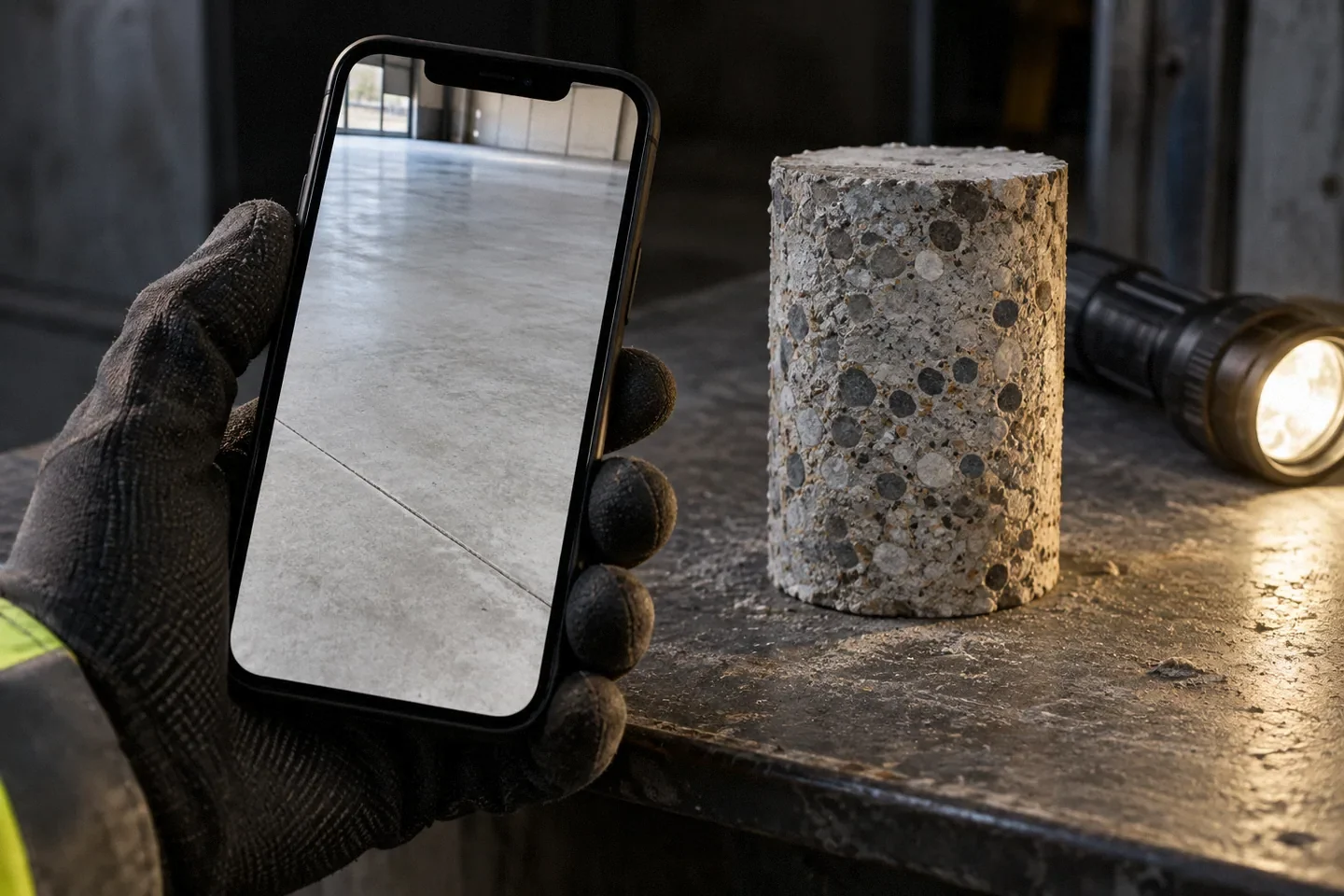
If the assessment proposes sampling or opening concealed work, ask what question it will resolve and how the work will be protected and restored. The FHWA materials manual provides background on structured material evaluation. Do not use it as instructions for owner-performed drilling or sampling.
Avoid false certainty in the final record
A report may include limitations because part of the element could not be observed or records were missing. Preserve those limitations when sharing the conclusion with a contractor, buyer or insurer. “No concern observed in the accessible area” is not equivalent to “every hidden condition was certified.”
Likewise, a recommendation for further investigation should not be rewritten as a confirmed failure. Accurate communication helps all parties decide what to do next and reduces the risk of a new dispute caused by overstating the evidence.
If the contractor offers a repair before assessment, document the existing condition and clarify whether the proposed work would obscure evidence. Necessary safety measures should still proceed under qualified direction; preservation should not become a reason to leave a hazard unaddressed.
Can an experienced person diagnose concrete from one photo?
They may identify possibilities or useful questions, but the image may omit decisive conditions. Treat remote comments as preliminary observations unless a qualified professional has defined the limits and obtained the needed evidence.
Does a clean-looking surface prove the slab is structurally adequate?
No. Appearance does not establish hidden details or material performance. Structural questions require the relevant design context and appropriate professional assessment.
Use photographs to make the next inspection more efficient. A clear question, location map and honest list of missing evidence are more valuable than a confident online verdict unsupported by the site.
Research references
- primary · full
FHWA: Field Materials Manual - primary · full
FHWA: Concrete Strength Testing Practices for Acceptance - reddit · search-excerpt
Bad pour. - reddit · search-excerpt
Concrete slab failed strength test