- Map the fine-crack pattern
- Check for loose surface material
- Test any appearance treatment
Reddit discussions identify questions; technical guidance comes from the linked primary sources. This article is not a site inspection or an engineered specification. How we research.
Why the surface suddenly looks different after rain
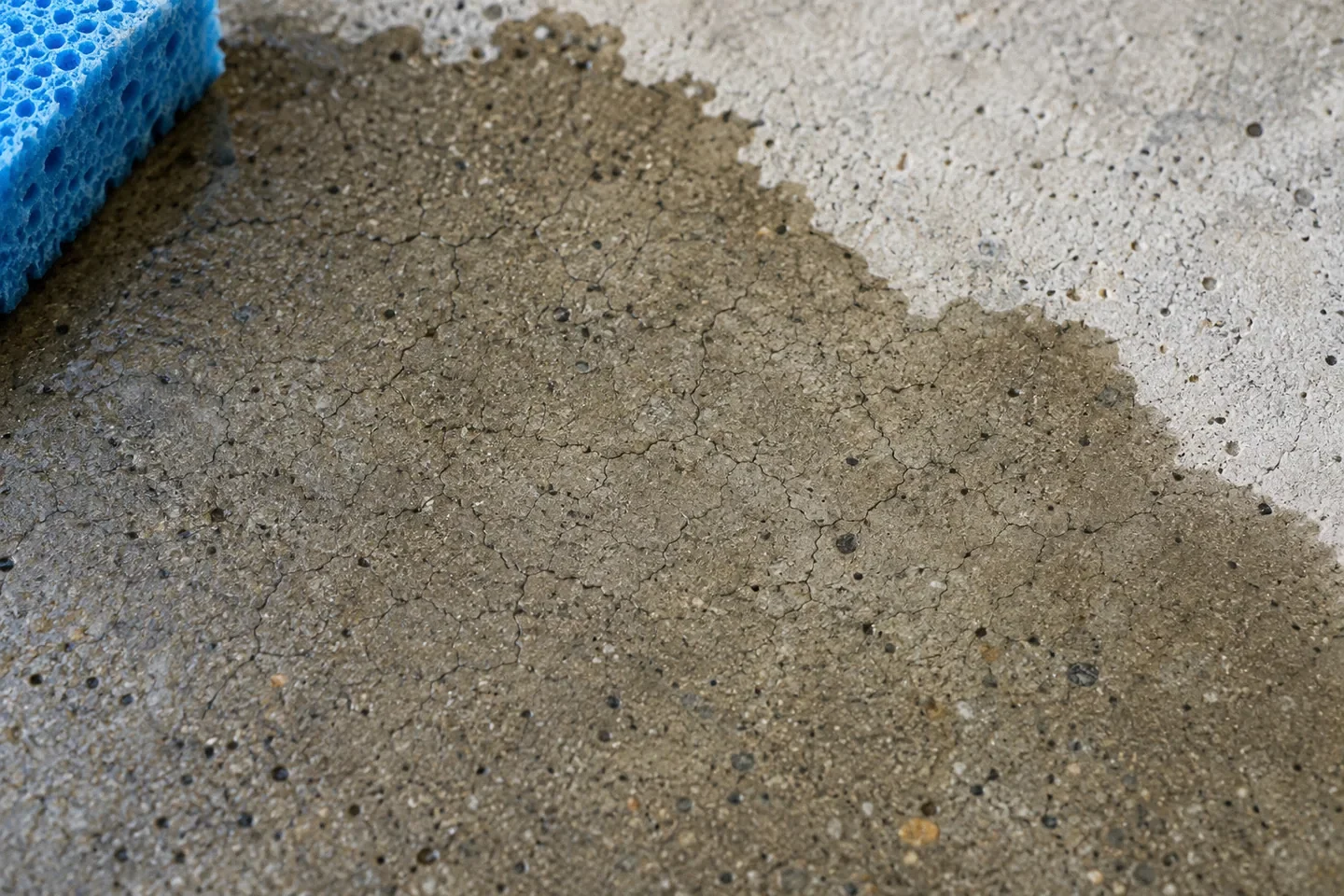
A driveway can look fairly uniform when completely dry, then reveal a web of fine lines during the drying period after rain. That change in visibility understandably makes homeowners wonder whether the rain caused new damage. First determine whether the pattern is newly formed or newly visible. Compare photographs under similar conditions: fully dry with fully dry, and partially drying with partially drying. Comparing a shaded wet photograph with a sunny dry one can make a stable condition appear to have changed dramatically.
A Reddit homeowner describing fine cracks across new flatwork also reported that mulch dye made the lines stand out. The discussion contained conflicting predictions about future failure. It demonstrates the concern, not a reliable prognosis. Neither the number of comments nor an emphatic response substitutes for examining the surface.
What the term crazing actually contributes
Crazing describes a network of fine surface cracks. NRMCA discusses its appearance and distinguishes it from more consequential forms of cracking in CIP 3, Crazing Concrete Surfaces. The term is useful because it directs attention to the surface layer and the pattern. It is not permission to label every fine line harmless, especially when there are other symptoms.
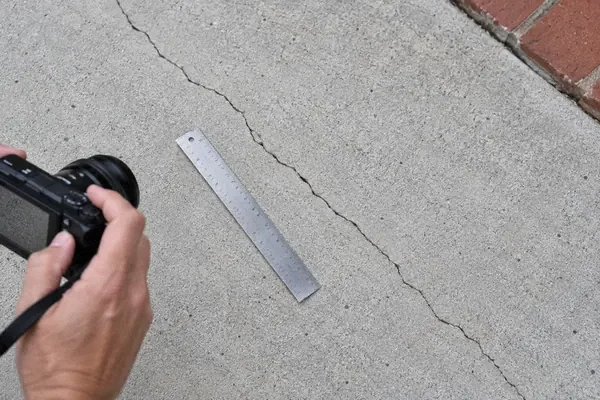
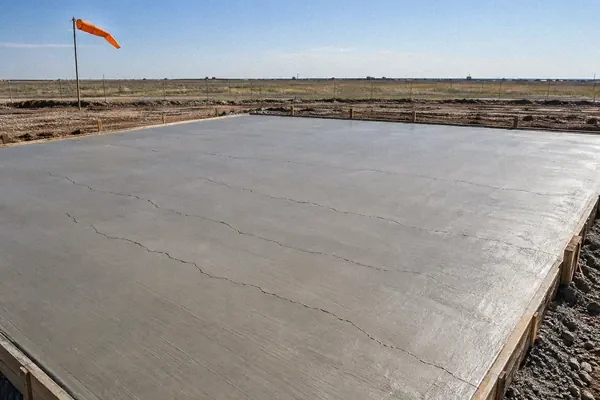
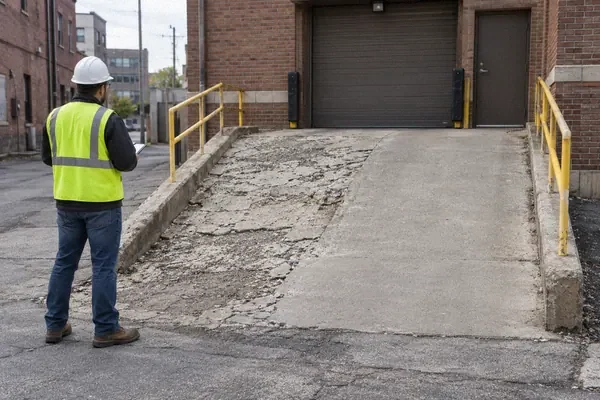
A single long crack running across a panel is a different observation from a closely spaced network. Areas that sound hollow, shed flakes or have displaced edges require their own assessment. Several conditions can coexist on the same installation. A contractor should be able to explain which observations support the proposed identification and which observations remain unresolved.
Avoid using the apparent width of a wet line as a depth measurement. The darkened area around it may look wider than the actual opening. Similarly, the fact that dye entered a line does not tell you how deep the line extends or establish whether a clear protective treatment was applied at the intended rate.
Inspect appearance and material condition separately
Begin with a simple map. Note whether the network covers the entire pour, only sunny areas, only a particular truck placement, or a zone near a wall. Record the surface finish and whether a curing compound or sealer was used. Ask for the product name rather than relying on the word sealed, which can describe different materials and purposes.
Next, describe what happens during normal use. Does ordinary sweeping collect concrete-colored debris? Are edges breaking away? Does the surface feel rougher in the affected area? Do not manufacture a test by attacking the surface with a screwdriver, acid or a high-pressure nozzle. An aggressive treatment can change the condition you were trying to document and create a second problem.
For an initial conversation, organize observations this way:
| Observation | Question it helps answer |
|---|---|
| Fine network appears mainly while drying | Is the concern primarily visibility under moisture changes? |
| One line crosses several panels | Is there a separate cracking pattern to investigate? |
| Surface pieces detach | Is there loss of material beyond an appearance issue? |
| Dark stains concentrate in lines | Is cleaning or stain management part of the objective? |
| Pattern changes in comparable photographs | Does the condition warrant a closer review? |
The table is a record format, not a diagnostic chart. A combination of observations can change the appropriate next step.
Why a cause cannot be assigned from the pattern alone
Finishing and curing conditions belong in the investigation, but a homeowner rarely has enough information to reconstruct them from the finished surface. The useful questions concern actual records: when finishing ended, what curing method was specified, when it began, and what instructions were given afterward. Ask those questions without converting them into a claim that a particular worker added too much water.
NRMCA's discussion identifies several practices associated with crazing; it does not provide a way to determine responsibility from a single image. A written technical assessment should distinguish a plausible mechanism from an established cause. This distinction matters if you are negotiating corrective work, because an unsupported allegation can distract from a clearly documented appearance or performance concern.
Cleaning and sealing are separate decisions
If the surface is sound and the remaining concern is appearance, decide what outcome would count as improvement. Removing a stain from the lines is different from making the network invisible. Ask a cleaning contractor to test a discreet area using a method compatible with the finish and any existing treatment. Judge the area after it dries, then again under the moisture conditions that originally revealed the lines.
For sealing, request the exact product and expected color change. Euclid notes that some sealers emphasize existing surface variation in its discussion of common sealer problems. A photograph of another driveway is not an adequate substitute for a test on yours. Do not approve the full application based only on how the surface looks while the test is freshly wet.
A hypothetical homeowner decision
Imagine a hypothetical patio with a fine network visible after rain but no observed flaking or displacement. The owner dislikes the appearance, particularly beside an unstained section. After a contractor evaluates the surface, the owner commissions a small cleaning test. It removes a localized plant stain but leaves the network visible during drying. That is useful information: the cleaning worked on the stain but did not erase the underlying appearance.
The next decision is whether a sampled finish offers enough improvement to justify its maintenance requirements. Choosing to observe the surface instead is also a defined decision when the condition has been properly assessed. What is unhelpful is repeatedly applying products in the hope that one will make the lines disappear.
What to ask at the site visit
Ask for an explanation of the identified condition, the evidence for it, and whether any separate surface defects were found. Then ask which treatment, if any, addresses your actual concern. Keep the response, test-area photographs and product information together. A good outcome is a clear understanding of what is present and what a treatment can accomplish, even when the honest answer is that the concrete will retain some visible character.
Related questions
Will fine wet-weather cracks necessarily become deep cracks?
A surface network does not by itself establish progressive cracking. Have changing openings, height differences or loose material evaluated separately rather than assuming every line is crazing.
Will a clear sealer hide crazing?
The visual result depends on the surface and the sealer. A test area matters because an appearance treatment can make existing variation more noticeable.
Research references
- primary · full
NRMCA CIP 3 - Crazing Concrete Surfaces - primary · search-excerpt
Euclid Chemical: Diagnosing 5 Common Concrete Sealer Problems - reddit · search-excerpt
Cracks