- Compare cracks with the joint map
- Verify timing and depth evidence
- Review any proposed retrofit
Reddit discussions identify questions; technical guidance comes from the linked primary sources. This article is not a site inspection or an engineered specification. How we research.
This is an investigation of an existing job
There are two different saw-cut questions. One concerns planning a future placement so joints are made at an appropriate time. The other concerns a slab already poured, where the owner suspects cuts were late or shallow. This article addresses the second. The goal is to determine what the evidence supports and what a proposed corrective cut would accomplish now.
A Reddit question about a newly colored slab included concern that the joints appeared shallower than expected. Comments suggested simply cutting deeper. That may sound straightforward, but a responsible decision needs more information: the joint method, actual depth, slab detail, crack timing and anything embedded below the surface.
Begin with the crack and joint map
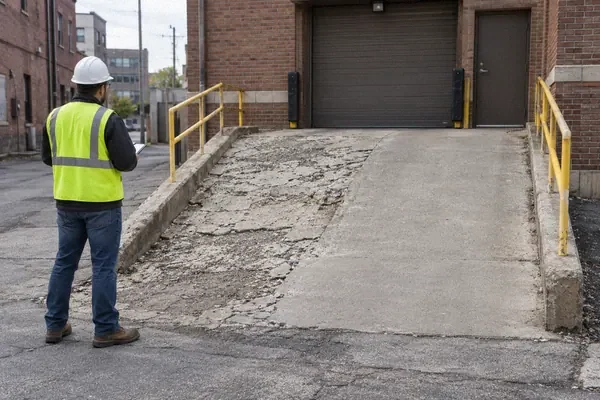
Photograph the whole layout and mark where cracks lie relative to the cuts. Does a crack follow a joint, run beside it, begin at a corner or cross a panel? Record when each line was first observed. A crack discovered after sawing may have formed before sawing; discovery time alone does not establish the sequence.
Keep the original photographs, messages and any site video. Ask the installer for the actual cutting time and method rather than a description of usual practice. If the record is incomplete, the assessment should acknowledge that uncertainty. A precise accusation about timing should not be built from a vague memory that the crew returned later.
The layout also matters. A cut can have adequate depth yet belong to a panel arrangement that deserves review. Conversely, an apparent surface groove may not show the entire cut. Avoid reducing the investigation to one dimension before the whole pattern is understood.
Depth depends on the actual joint method
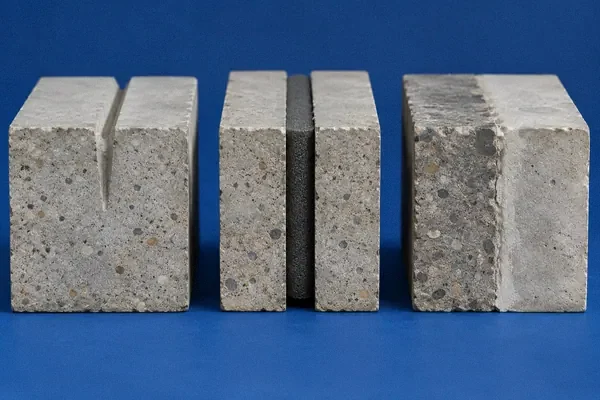
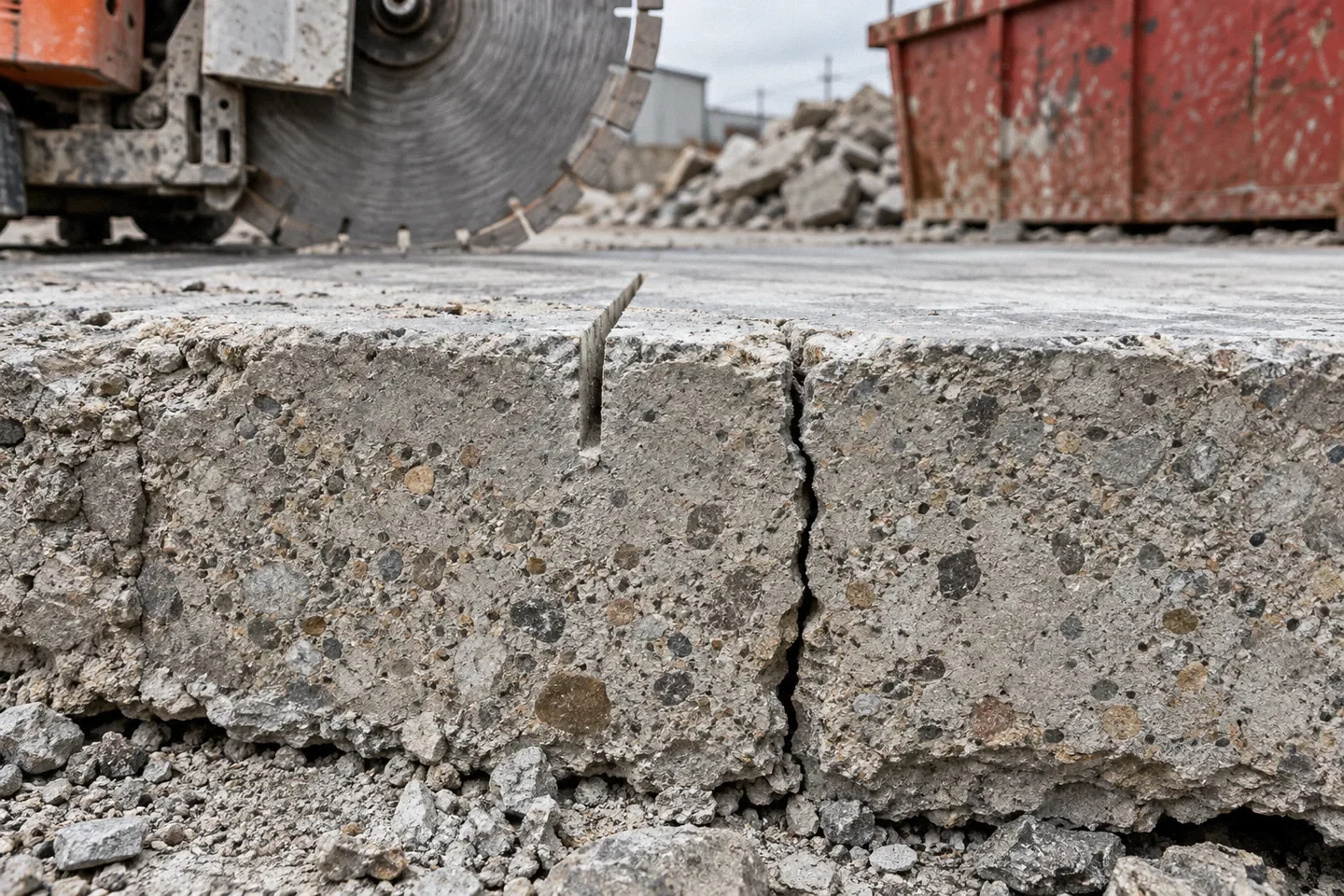
NRMCA discusses different joint-making methods, their timing and depth considerations in CIP 6. The practical implication is that an early-entry cut and a conventional saw cut should not be judged casually as if they were the same operation. Ask the contractor to identify the method and the applicable project requirements.
Do not push a tool into a joint and assume the measured obstruction is its original bottom. Dust, debris, sealant or an irregular groove can confuse a homeowner measurement. If depth verification matters to the decision, request a suitable method and a written result. Clarify whether the assessment covers all joints or only sampled locations.
Likewise, do not assume the slab thickness from the form board alone. The actual detail may vary across the project. A claim that a cut is a particular fraction of thickness requires a defensible thickness reference and knowledge of the method being evaluated.
Timing evidence is stronger than a general rule
The question is not merely how many hours passed. Ask what concrete and site conditions were present and whether the surface could be cut without unacceptable damage at the time. The contractor should explain the practical window for the method used and relate it to the available records.
A line that formed before the saw arrived is important evidence, but it does not by itself identify every contributing cause. Joint layout, restraint, support and other factors can be relevant. NRMCA CIP 4 provides broader context for cracking mechanisms. Use that context to ask for a complete assessment rather than making one suspected error explain every symptom.
If a dispute depends on whether the installed work met a specification, obtain the actual specification. Internet recommendations are not automatically the contract's acceptance criteria. The evaluator should state which document or design requirement is being used.
What would an additional cut accomplish?
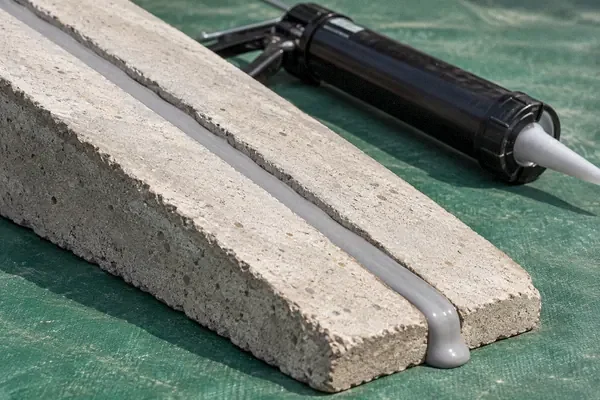
Ask the proposer to state the objective before authorizing cutting. Is the work intended to complete an omitted joint, prepare a sealant detail, address layout or create a drainage channel? These are different tasks, with different implications. A drainage cut should not be disguised as a crack-control repair, and a wider groove does not by itself resolve a height difference.
Any proposed cutting must account for the slab's function and embedded items. Structural, post-tensioned or otherwise unfamiliar slabs require an appropriate review before invasive work. Do not approve a depth based on a photograph or a generic online example.
Also discuss appearance. A recut may be wider, may not align perfectly with the existing groove, and may leave edges that differ from adjacent work. Ask to see the proposed layout and understand the expected finish. If a sample is appropriate, agree where it will be made and what constitutes acceptance.
Evidence checklist for the review
- Placement date and best available finishing timeline.
- Actual saw-cut method and cutting records.
- Joint layout and project drawings.
- Verified slab and cut dimensions where relevant.
- Photographs showing when cracks were first visible.
- Location of existing damage and any displacement.
- Proposed purpose, limits and appearance of corrective work.
The checklist is deliberately about evidence. It does not prescribe a retrofit depth or tell a homeowner to operate a saw.
A hypothetical decision
Suppose a hypothetical patio has a crack across a panel and cuts that look shallow. The owner asks for deeper cuts everywhere. A review finds that some visible grooves contain debris, the method differed from what the owner assumed, and the timing of the crack is uncertain. The original proposed remedy was therefore premature.
In a different location, the records may establish an omitted or incomplete detail requiring correction. Even then, the contractor should explain what correcting it now will achieve and how the existing crack will be handled. An honest scope separates preventing additional problems, maintaining joints and repairing damage already present.
Request an explained corrective scope
Send the joint map and records to the installer and ask for a documented assessment. If uncertainty remains material, obtain an appropriately qualified independent review. Approve further cutting only when its purpose, constraints and expected result are clear. The best response to a suspected late or shallow cut is evidence-based correction, not an automatic second pass with a deeper blade.
Related questions
Can deeper cuts erase cracks that already formed?
No. A proposed later cut should be judged by what it can accomplish now, not by a claim that it reverses an earlier crack.
Can a photograph prove a saw cut is too shallow?
Usually it cannot establish the full cut depth or the method used. Ask how the depth was verified and which project detail applies.
Research references
- primary · full
NRMCA CIP 6 - Joints in Concrete Slabs on Grade - primary · full
NRMCA CIP 4 - Cracking Concrete Surfaces - reddit · search-excerpt
Help identifying coloring issue