- Name the repair purpose
- Review a cured sample
- Compare dry and wet appearance
Reddit discussions identify questions; technical guidance comes from the linked primary sources. This article is not a site inspection or an engineered specification. How we research.
The line and the repair are different visual objects
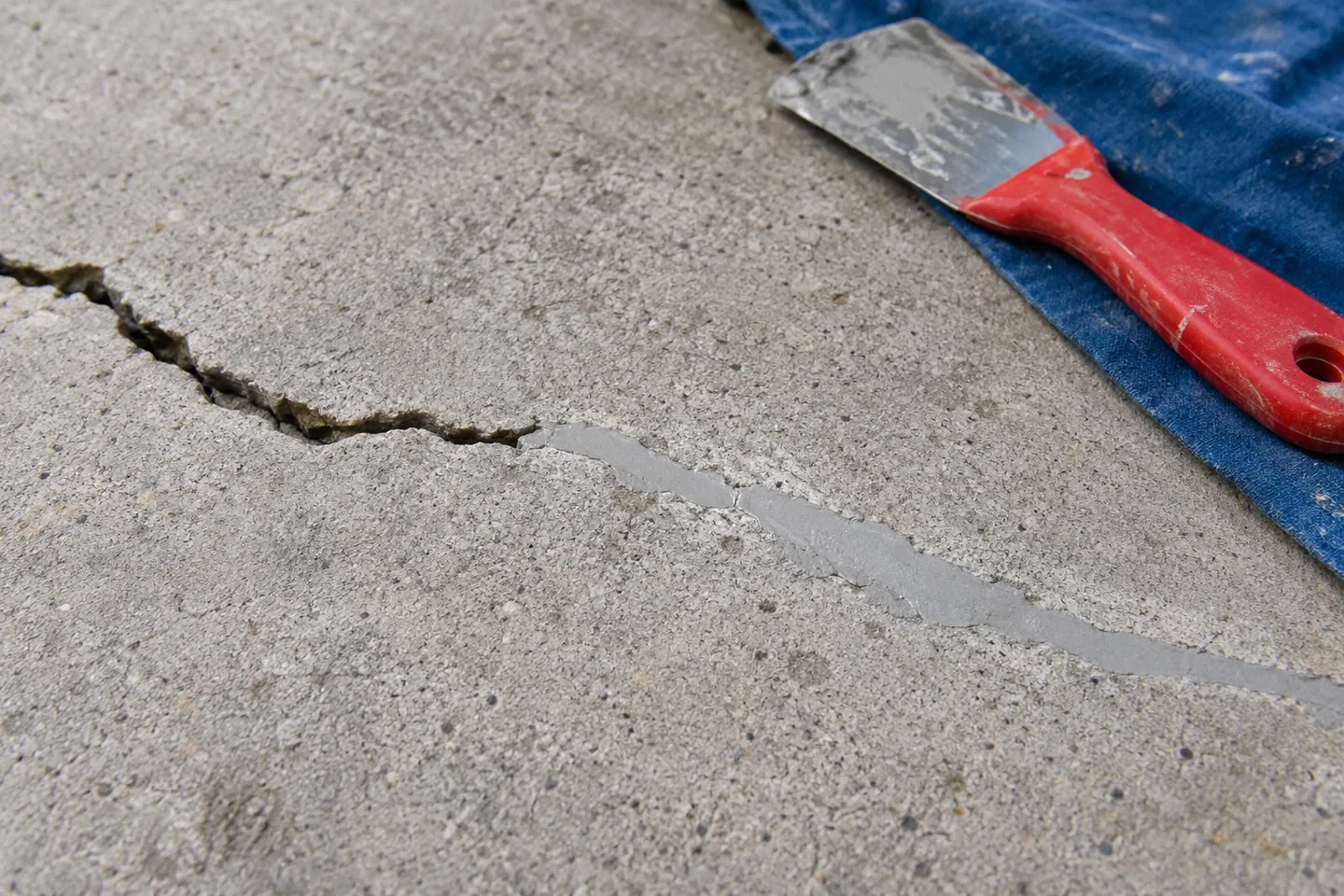
A fine crack may be dark but narrow. A repair can introduce a wider strip with a different texture or sheen. That does not necessarily mean the work was poorly executed; it means the appearance of the repair needs to be considered before the entire surface is treated. A homeowner who expects the line to disappear may be disappointed by a treatment that performs its intended function.
In a Reddit request for crack-repair recommendations, advice to use a sealant was followed by concern that the result could look worse. The disagreement is useful because it separates two objectives that often get combined: limiting water entry and making concrete look untouched. The thread cannot establish which product is appropriate for a particular crack.
State what the work is supposed to accomplish
Ask whether the purpose is sealing, accommodating movement, restoring a broken edge or preparing for a later coating. A repair meant to serve one of these functions may not deliver an invisible finish. The written scope should describe the purpose and the expected appearance separately.
Product selection must fit the crack or joint, not just the desired color. The Sikaflex Self Leveling Sealant information, for example, describes a product intended for horizontal joints and gives preparation requirements. That is more relevant than whether the cartridge looks close to the slab's shade in a store.
For resurfacing, ARDEX CD technical data explains that movement can cause cracks to show again. A broader cosmetic treatment therefore does not remove the need to understand the original condition. Avoid approving a coating solely because it temporarily hides a sample line.
Why color matching is harder than buying gray
Existing concrete is rarely one perfectly uniform color. A broom finish creates small shadows; aggregate, weathering and past treatments add variation. A smooth repair placed across that surface may stand out even if its basic hue is close. Judge the whole visual effect rather than only the pigment name.
The surrounding slab can also look different when damp. If the complaint first appears after rain, inspect the sample under comparable conditions. A repair that blends when freshly applied may change as it cures, and a match in shade may be less convincing in direct sun. Ask the contractor when the sample is ready to evaluate according to the selected material's instructions.
Do not require an installer to make an unsupported promise about how a repair will weather. Instead, ask what is known about the product and what remains uncertain. Samples and photographs are useful, but neither guarantees that a repaired strip and older concrete will age identically.
Specify a sample that answers the actual question
Choose a representative, discreet location with the contractor. A sample on an unrelated piece of concrete can show color but may not reproduce adhesion, texture or moisture behavior on the actual slab. The sample should use the intended preparation, material and finishing method. Otherwise you are approving a demonstration that differs from the proposed work.
Agree on sample dimensions and whether it can remain if the full treatment is declined. This avoids creating an unwanted patch in the most prominent area. Record the product, color, preparation and application date so the approved result can be reproduced as closely as practical.
Use this checklist when reviewing it:
- Is the sample sufficiently cured for evaluation?
- Does its width match the proposed repair detail?
- Is the surface smooth, textured or glossy compared with the slab?
- How does it look from ordinary viewing distance?
- Does it remain acceptable in sun, shade and after wetting?
- Does it accomplish the functional goal described in the scope?
- What maintenance or future replacement will the material require?
A close-up photograph is useful evidence, but the patio should also be judged from the places people normally stand or sit.
Compare local repair with wider cosmetic treatment
A local repair limits the area changed but may leave a contrasting line. A larger resurfacing or coating project can create a more uniform overall appearance, yet it adds cost, preparation and maintenance. It may also retain visible joints or reflect existing movement. These are different scopes, not simply different brands of filler.
Ask for a comparison that includes the expected finished appearance, substrate preparation, treatment of existing joints and likely future touch-up work. If a proposal offers a perfect surface without acknowledging those details, request a more precise description. The least expensive initial option is not necessarily the least costly to maintain, but a whole-surface treatment is not automatically justified by one visible line either.
Leaving a documented, evaluated crack untreated may also be a reasonable option when no functional repair is needed and the cosmetic alternatives are less acceptable. That decision should follow assessment, not replace it.
A hypothetical sample decision
Suppose a hypothetical homeowner wants a narrow patio crack to disappear. The contractor offers a flexible material suited to the assessed condition but warns that it will remain visible. A cured sample shows a lighter, smoother line. The homeowner finds it acceptable near the patio edge but too conspicuous across the main seating area.
That result is useful before full application. The parties can reconsider the objective, compare a broader decorative treatment or decide whether observation is appropriate. Without the sample, they might have ended with a technically intended repair and a completely avoidable disagreement about appearance.
Approve a result you have actually seen
Document the approved sample and the limits of the agreement. Avoid words such as invisible unless the contractor can define and substantiate them for the project. A successful repair discussion acknowledges that performance and appearance are related but distinct. Choose a suitable method, inspect a realistic sample and decide whether the remaining visual difference is acceptable before repeating it across the slab.
Related questions
Can a gray filler disappear into gray concrete?
A color name does not guarantee a match. Texture, sheen, aging and the surrounding concrete's variation can keep the repair visible.
Should appearance concerns stop a necessary repair?
Not automatically. Separate the functional need from the cosmetic options, then choose the least objectionable suitable treatment with realistic expectations.
Research references
- primary · search-excerpt
Sikaflex Self Leveling Sealant - primary · search-excerpt
ARDEX CD Technical Data - reddit · search-excerpt
Recommendations on cracks?