- Identify existing treatments
- Remove unsuitable surface material
- Verify system-specific readiness
Reddit discussions identify questions; technical guidance comes from the linked primary sources. This article is not a site inspection or an engineered specification. How we research.
Clean-looking is only one observation
A driveway can be swept, washed and visibly free of dirt while still carrying an old sealer, weak surface paste or incompatible patch material. A resurfacer must bond to the actual substrate, not to the owner's impression that the area looks ready. Preparation should therefore be specified by the condition it must achieve.
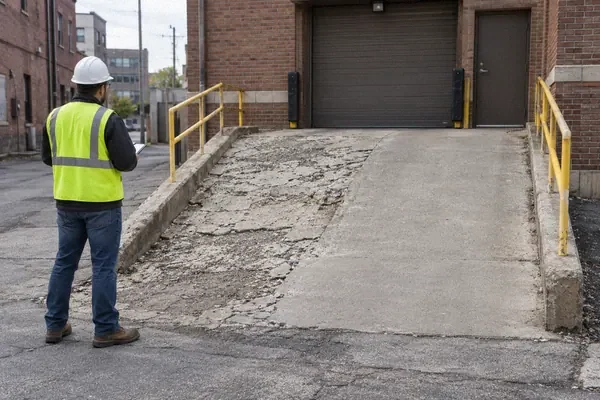
A Reddit discussion about repairing an acid-damaged driveway moved toward a concrete dressing after loose material had been removed. The underlying question is how to know the remaining surface is suitable. A product recommendation alone does not answer that, especially where chemical exposure or an existing treatment is involved.
Start with the selected system's instructions
The ARDEX CD technical data is an example of a manufacturer specifying substrate condition, preparation and installation limits for a concrete dressing. It identifies contaminants and weak concrete as concerns and does not treat all cleaning methods as interchangeable. Other products have their own requirements.
Ask the contractor to name the complete system and provide the current data sheets. If a primer, patch or sealer is part of the work, include it in the review. The compatibility of the combined system matters more than whether each individual product is commonly used on concrete.
Do not combine instructions from several brands to create a hybrid method unless the responsible manufacturers support it. A preparation recommendation appropriate for one material may not establish readiness for another.
Find out what is already on the slab
Collect the history of sealers, curing compounds, stains, paints and repairs. Include spills and previous cleaning attempts. If the owner bought the property recently, some of this may be unknown. Tell the installer rather than assuming an old treatment has disappeared because it is no longer glossy.
Ask how unknown areas will be investigated. A uniform machine pass across the whole slab may not produce a uniform result if different coatings or patches are present. The contractor should identify areas requiring additional attention and explain how they will be checked.
Keep photographs before preparation. They can show the extent of old repairs, contamination and damage that will be difficult to identify later. The record also helps explain any authorized scope changes when the surface is opened up.
Soundness and cleanliness are different requirements
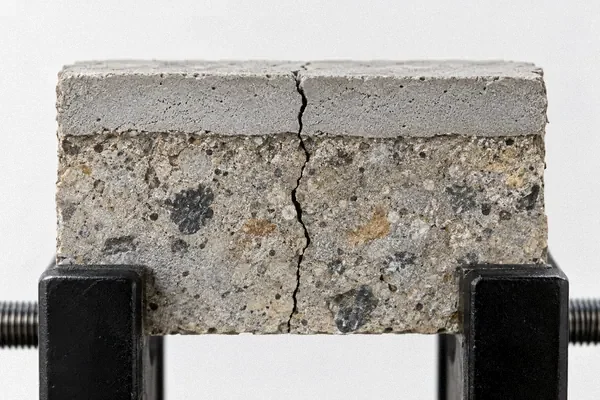
Loose or weak concrete is a substrate problem even when it is clean. A contractor should explain how unsuitable material will be identified and removed. If preparation reveals more extensive deterioration, the repair plan may need to change before the dressing is applied.
A Reddit garage-floor preparation question illustrates that removal can expose deeper areas than initially expected. The homeowner's estimate of shallow damage changed during grinding. That is why quotations should explain how discoveries are handled rather than pretending the visible surface defines the whole job.
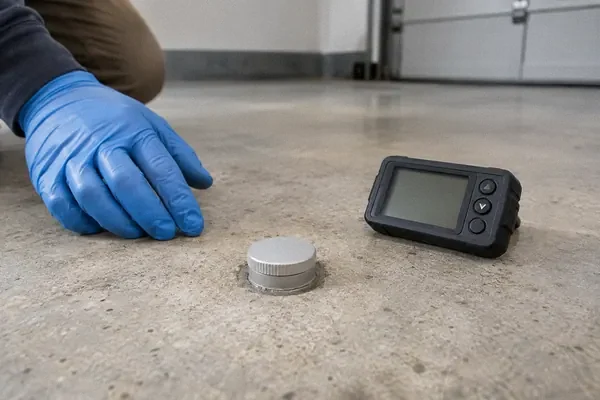
Do not perform random destructive checks yourself to prove the floor is hard. The assessment method should be appropriate to the system and interpreted by someone who understands the substrate. A few successful scratch marks do not establish readiness across the whole area.
The surface profile must suit the product
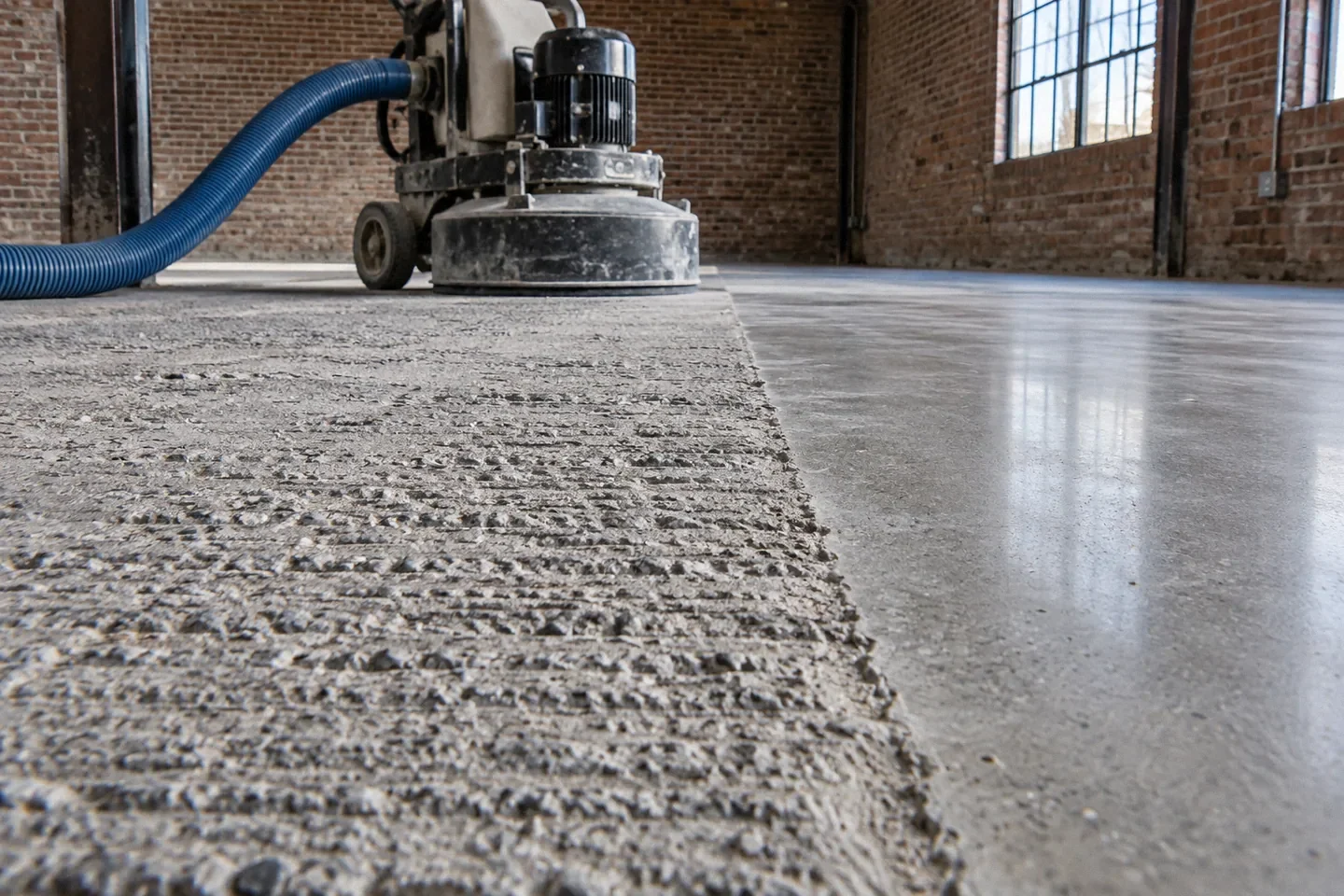
Preparation changes texture as well as removing material. Ask what profile or condition the selected resurfacer requires and how the contractor will achieve it. Grinding, blasting and washing are methods with different effects; the machine name is not the acceptance criterion.
Discuss edges, corners, joints and areas equipment cannot easily reach. A well-prepared central area does not compensate for an untreated perimeter. Ask how transitions to doorways, drains and retained concrete will be handled within the product's permitted thickness and application details.
Also ask how the surface will be protected between preparation and installation. Other trades, vehicles or runoff can recontaminate a ready area. The schedule should account for that possibility rather than assuming the preparation remains acceptable indefinitely.
Do not improvise the final installation conditions
Once preparation is complete, the product's requirements for moisture condition, temperature, mixing and application still apply. Follow the exact instructions for the chosen material. Do not infer that every cementitious product needs the same wetting routine or that adding water improves workability without consequences.
Ask who verifies readiness immediately before application. If the weather changes or the prepared surface gets wet or contaminated, there should be a defined response. The owner should not be asked to approve proceeding solely because the crew has already mixed material.
For outdoor work, the plan should explain protection during the period required by the system. This is separate from the original concrete's historic curing record and should be documented for the new treatment.
A preparation scope checklist
- Known and unknown existing treatments.
- Areas of weak, detached or damaged concrete.
- Required removal and cleaning methods.
- System-specific surface profile and condition.
- Treatment of old patches, cracks and joints.
- Edge, threshold and drainage transitions.
- Protection after preparation and during installation.
- Readiness review and handling of unexpected conditions.
Use the checklist to compare bids. A low price that omits necessary preparation is not equivalent to a complete restoration scope, even if both proposals name the same resurfacer.
A hypothetical patio preparation review
Imagine a hypothetical patio that looks clean after washing but has an old clear sealer in shaded areas. The owner wants to apply a dressing immediately. The installer reviews the product history and determines that preparation must address those areas before the selected system can proceed.
During that work, a few weak patches are exposed and documented. The owner approves defined repairs, and the substrate is reviewed again before application. The extra steps are tied to specific findings, not a vague claim that more preparation is always better. That makes the work concrete, reviewable and easier to price fairly.
Ask to see readiness, not just activity
At completion of preparation, request the agreed documentation and an explanation of any remaining limitations. Keep the product and repair records. The objective is not the loudest machine or the cleanest-looking photograph. It is a substrate that meets the selected system's requirements across the whole area, including the difficult edges and previously damaged spots.
Related questions
Is pressure washing alone enough preparation?
That depends on the system and existing condition. It should not be assumed to remove every coating, contaminant or weak layer.
Can I add extra water to make resurfacer easier to spread?
Follow the exact product's mixing instructions. Changing the mixture without manufacturer guidance changes the installation from the specified system.
Research references
- primary · search-excerpt
ARDEX CD Technical Data - reddit · search-excerpt
Spalling driveway - reddit · search-excerpt
concrete delamination