- Prevent skin contact
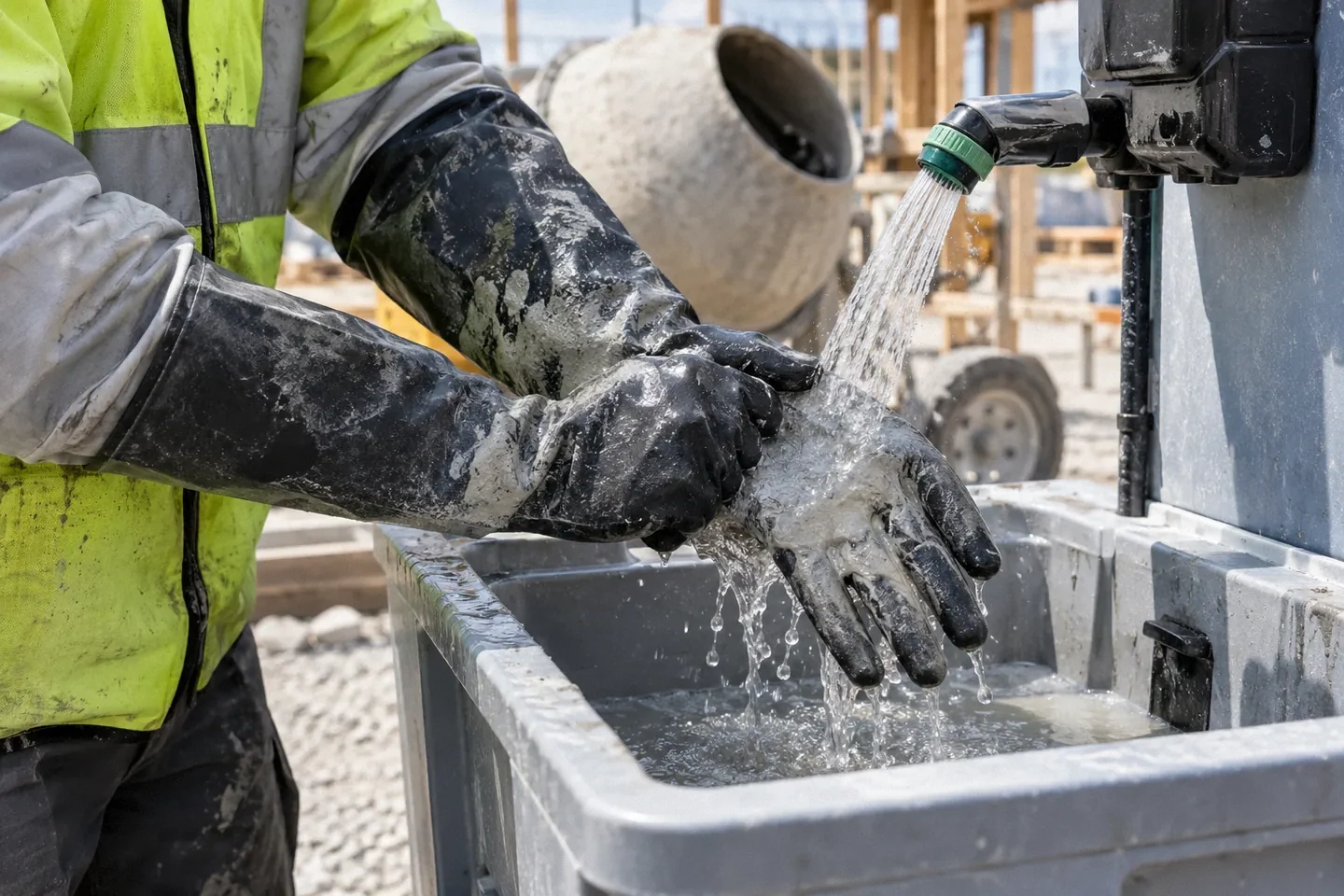
- Rinse exposure promptly
- Get professional medical guidance
Reddit discussions identify questions; technical guidance comes from the linked primary sources. This article is not a site inspection or an engineered specification. How we research.
Understand why comfort is not a safety test
OSHA's Portland cement skin-safety guidance warns that burns may develop without immediate pain and can worsen after contact ends. That means “it did not hurt while I was working” is not a reliable reason to dismiss an exposure.
This risk concerns the cement-containing material, not just visibly hot concrete. Someone helping briefly, kneeling near a placement or stepping into wet material can misunderstand the hazard. A small homeowner project does not make prolonged skin contact a safe technique.
A Reddit account of a first concrete burn describes material entering around boots. It is a personal account rather than a medical assessment, but it highlights a practical problem: protective clothing can fail when wet material gets inside it.
Act on exposure before debating remedies
Poison Control's cement-specific guidance recommends immediate rinsing with cool or room-temperature water for at least 15 minutes after skin or eye exposure. Contact Poison Control in the United States at 1-800-222-1222 for individual guidance, and seek urgent medical care for a suspected burn. For any cement contact with the eyes, start rinsing immediately and get medical help right away; do not wait for pain or visible injury.
Remove contaminated clothing or footwear when it can be done safely while avoiding further exposure. If symptoms are severe, vision is affected or another emergency is present, obtain emergency help. Do not postpone care to finish the pour, photograph the injury or locate a product receipt.
This article is not a diagnosis or a home treatment plan. A healthcare professional needs the actual exposure circumstances and symptoms to advise on care. Even a clear photograph cannot reliably establish the depth or likely course of a chemical injury.
Do not turn internet chemistry into first aid
Concrete threads often recommend vinegar, creams or waiting several days. Those suggestions can be inconsistent and may address different circumstances. The MedlinePlus chemical-burn guidance says not to attempt chemical neutralization without consulting Poison Control or a healthcare provider.
Some occupational skin-care documents discuss cleaning residual cement from skin. That is not a reason to improvise treatment of a suspected burn with a household acid. Keep immediate rinsing and professional advice separate from a debate over workplace residue-cleaning practices.
Do not apply an unverified product because someone reports that it helped them. Individual anecdotes do not establish that the same action is suitable for your exposure, especially near the eyes or on damaged skin.
Plan protection before opening the material
Discuss the task and suitable protective equipment with the employer or responsible contractor. Protection must account for how material could reach hands, feet, knees, sleeves and the inside of garments. Having gloves nearby is not the same as using equipment appropriate to the work.
OSHA's guidance addresses protective clothing and prevention of trapped wet cement. Follow the relevant product and workplace instructions rather than assuming ordinary garden gloves or everyday footwear are suitable. If protection becomes contaminated inside, the exposure problem needs attention rather than another layer placed over it.
For a homeowner, the practical decision may be not to participate in placement at all. If you are not prepared for the task, standing aside and keeping others out of the work area is more useful than offering unprotected hands at the busiest moment.
A pre-placement safety conversation
| Question | Why to resolve it before work starts |
|---|---|
| Who is allowed in the placement area? | Prevents unprepared helpers and bystanders from entering |
| Where is immediate rinse water available? | Avoids searching after an exposure occurs |
| What protection suits the task? | Connects equipment to actual contact risks |
| What happens if clothing is contaminated? | Makes stopping and changing an expected action |
| Who calls for medical guidance? | Reduces confusion during an incident |
| What product information is available? | Helps describe the exposure accurately |
This is a preparation checklist, not a substitute for required employer training or a professional safety program. The homeowner should not take over the contractor's safety responsibilities, but can coordinate household access and know how to respond to an incident.
Hypothetical example: a helper keeps working
Suppose a friend helps move material during a small patio project. Wet concrete enters a shoe, but the person feels little discomfort and wants to finish the last section first. The group had not discussed exposure or identified a rinse location.
A better response is to stop the exposure, begin appropriate rinsing and obtain professional guidance promptly. Another prepared person coordinates the work so the exposed helper is not pressured to continue. The unfinished patio is a scheduling problem; it should not determine the medical response.
The example is hypothetical and does not predict the severity of any injury. Its purpose is to identify the decision point before discomfort becomes the only signal anyone notices.
Keep information ready for the clinician
Provide the product name if known, whether the material was wet or dry, the body area involved, approximate contact duration and what first aid was performed. Be honest about uncertainty. Do not guess an exact chemical concentration from a general online description of concrete.
If the product's safety data sheet is readily available, make it accessible to the medical professional. Do not delay rinsing or urgent care while searching for it. A photograph of the container can help identify a material later, but obtaining it should not create another exposure.
After the immediate issue is addressed, document the incident and review how contact occurred. The useful prevention question is what changes before the next task: access control, suitable protection, work method or readiness to stop. Blaming someone for not feeling pain early does not answer that question.
Should I wait until tomorrow if wet concrete exposure does not hurt now?
Do not use absence of pain as reassurance. Rinse promptly and contact Poison Control or a healthcare professional for guidance about the actual exposure, especially if a burn or eye injury is suspected.
Should I pour vinegar on a suspected cement burn?
Do not attempt neutralization without professional guidance. MedlinePlus advises consulting Poison Control or a healthcare provider, and prompt water rinsing should not be delayed while choosing a home remedy.
Prepare the work area and response before placement begins. If exposure occurs, prioritize rinsing and qualified medical guidance over finishing the job or comparing online anecdotes.
Research references
- primary · full
OSHA: Preventing Skin Problems from Working with Portland Cement - primary · full
MedlinePlus: Chemical burn or reaction - primary · full
Poison Control: Do not get burned by cement - reddit · search-excerpt
Cement Burns - reddit · search-excerpt
Concrete Burn Went to Urgent Care - reddit · search-excerpt
Did almost 50 yards of concrete Friday. Got my first real burn