- Document the joint and nearby ground
- Separate depth from support loss
- Specify the sealant section
Reddit discussions identify questions; technical guidance comes from the linked primary sources. This article is not a site inspection or an engineered specification. How we research.
A deep gap raises two different questions
When old joint material is missing, a homeowner may discover an opening much deeper than expected. One question concerns how to install a new sealant section. The other concerns whether material beneath the slab has been lost. Those questions can occur together, but they should not be answered with the same bag of filler.
A Reddit discussion about very deep driveway joints included suggestions involving sand, backer rod and expanding foam. The owner's underlying fear was that erosion might lead to future settlement. That concern cannot be resolved simply by making the surface opening disappear.
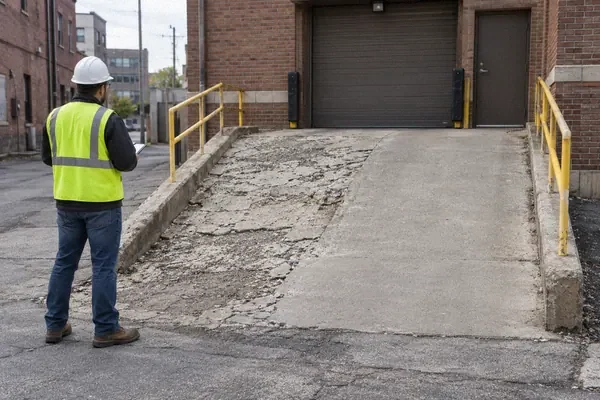
Begin by documenting the joint's location, apparent depth and condition of the surrounding ground. Note any panel movement, changing opening, water flow or broken edges. Avoid probing far beneath the slab or injecting material as an exploratory step. If the investigation requires invasive work, have its purpose and method defined first.
What backer rod does in a joint detail
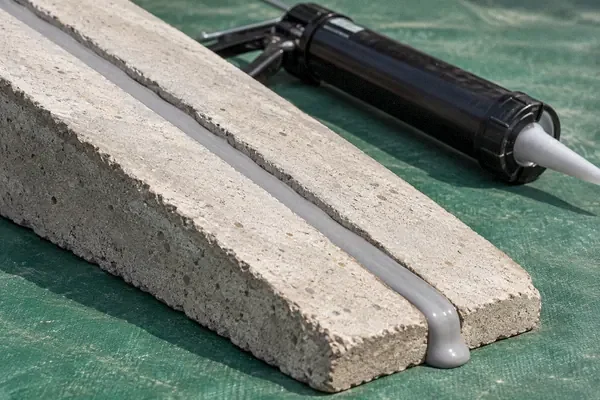
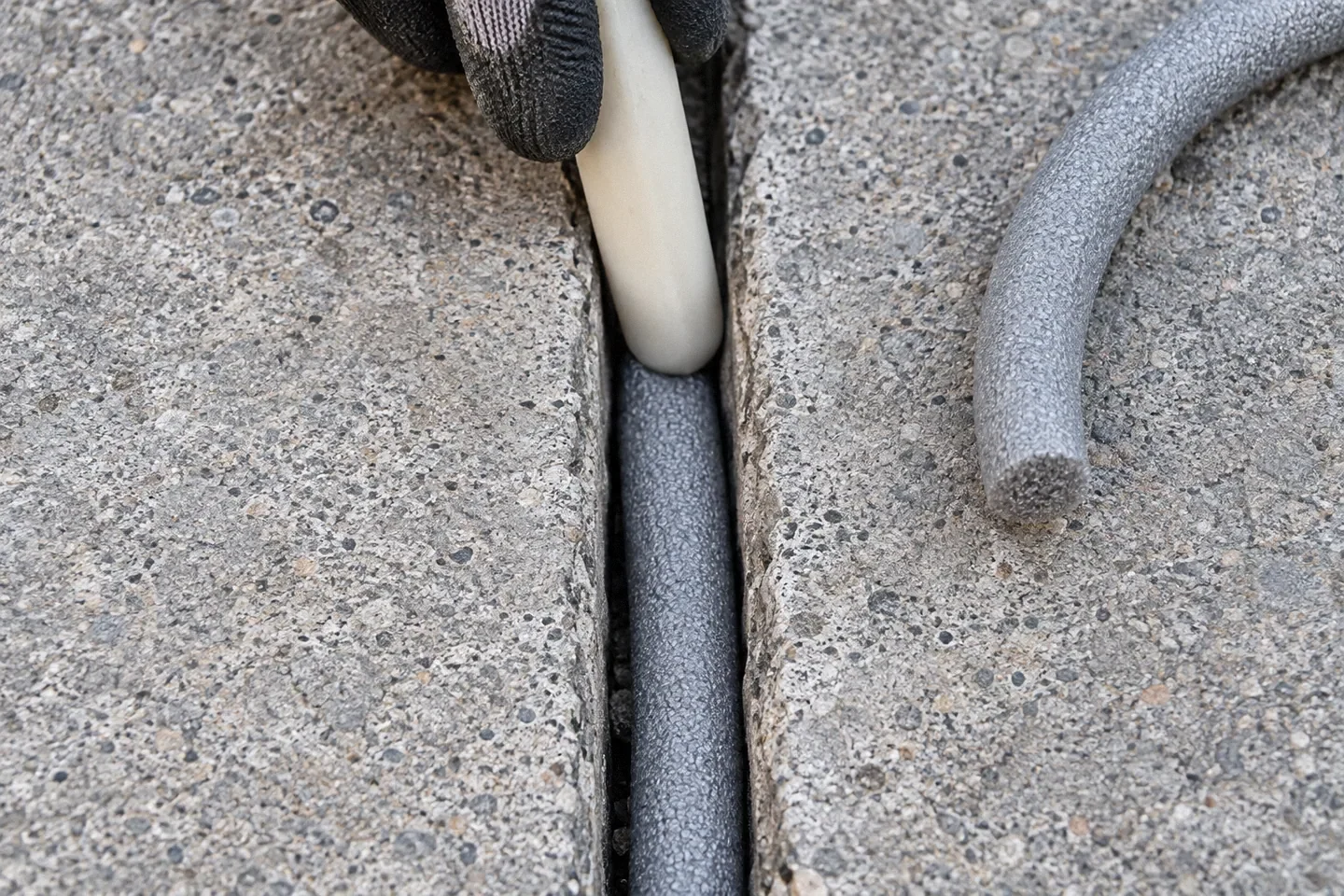
Backer rod is used as part of certain sealant installations to establish the intended section and control bonding. Sika's self-leveling sealant instructions call for backer rod or bond-breaker tape to prevent bonding at the base of the joint. The product's requirements govern the actual installation.
That role is different from carrying the slab or repairing a void beneath it. A neat sealant surface can coexist with a support problem that remains untouched. Ask the contractor to describe the material sequence and purpose of each component. If the explanation uses the word fill for everything, request more precise language.
Do not assume any foam material is equivalent to specified backer rod. Product characteristics, compatibility and dimensions matter. A household expanding foam selected because it is easy to buy has not thereby been established as suitable for the joint, much less for structural support.
Visible depth is not a map of the void
A gap between panels may extend through the slab by design. Its apparent depth may also reflect missing joint filler, accumulated debris or erosion near an exposed edge. These possibilities require different responses. The homeowner's measurement should therefore be described as an observation, not a definitive diagnosis of undermining.
Look for corroborating evidence. Has the nearby grade washed away? Does roof runoff discharge beside the joint? Has one panel moved relative to a fixed reference? Are there old photographs showing a different condition? These details help decide whether a support investigation is warranted.
The FHWA Concrete Pavement Preservation Guide distinguishes filling verified support voids from lifting settled pavement and emphasizes addressing the underlying mechanism. It concerns highway pavements, so it is not a residential injection specification. Its useful principle here is that support work should respond to a verified condition, not merely an alarming-looking opening.
Water deserves its own route map
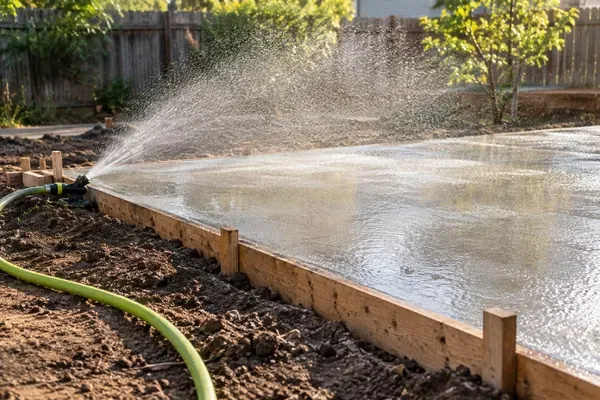
During ordinary rain, observe where water approaches the joint and where it goes afterward. Document downspouts, adjacent slopes and low areas. Do not deliberately flood a suspect opening to see what happens underneath. The aim is to understand existing flow without creating a more severe exposure.
If water management is part of the repair scope, ask for the destination of redirected water. Moving it from the top of the slab into the ground immediately beneath the slab is not automatically an improvement. A complete explanation should connect the surface treatment, nearby grade and any drainage work.
Sealing may reduce entry through the treated joint under suitable conditions, but it does not address every source of moisture around a slab. Ask which pathway the work is intended to change and what other pathways remain. That prevents a maintenance treatment from being sold as a complete cure for settlement.
Compare scopes by what they actually include
| Proposed item | What it should explain |
|---|---|
| Joint cleaning | Removal of unsuitable existing material and preparation of faces. |
| Backer rod | Product, sizing and role in the sealant section. |
| Sealant | Compatibility with movement, orientation and exposure. |
| Support investigation | Evidence being sought and how findings affect the decision. |
| Void filling or lifting | Verified objective and treatment of the underlying cause. |
| Drainage work | Where water will go after the change. |
A quote that includes only the first three items may be a perfectly legitimate joint-maintenance quote. It should not be represented as resolving the other three without evidence.
A hypothetical driveway review
Imagine a hypothetical homeowner removes loose old joint filler and sees a deep gap. The panels appear even, but soil beside one end has washed away below a downspout. The owner asks to fill everything with expanding foam and caulk. A better review separates the existing joint detail from the localized erosion and examines whether either has affected support.
The resulting work might involve joint maintenance plus a drainage correction, or it might require additional support evaluation before sealing. The correct scope cannot be chosen solely from the depth visible at the surface. The point of the investigation is to prevent an inexpensive cosmetic closure from concealing a condition that needs a different response.
If the contractor proposes both joint maintenance and support work, request separate descriptions and completion records. Photographs of a finished bead only demonstrate the visible sealant work; they do not document what happened beneath the panel. Ask what evidence will show that each distinct part of the scope was completed, without requiring invasive verification that was never part of the agreed plan.
Leave a record for the next repair
Keep photographs taken before the joint is covered, the product information and the contractor's explanation of any suspected support issue. If no support defect was established, record that limit rather than claiming it was repaired. A deep joint should end with a defined maintenance detail and an evidence-based answer to the support question, even when that answer is that further evaluation remains necessary.
Related questions
Can I fill a deep joint with household spray foam?
Do not assume a household gap filler is suitable for a concrete joint or support repair. Use a defined joint detail and investigate any suspected void beneath the slab separately.
Does a deep opening prove the slab is undermined?
No. The opening is evidence to investigate, but its visible depth alone does not map the support beneath the whole panel.
Research references
- primary · search-excerpt
Sikaflex Self Leveling Sealant - primary · search-excerpt
FHWA Concrete Pavement Preservation Guide, Second Edition - reddit · search-excerpt
What should I use to fill very deep expansion joints?