- Identify your contract party
- Map the site contacts
- Report concerns through one record
Reddit discussions identify questions; technical guidance comes from the linked primary sources. This article is not a site inspection or an engineered specification. How we research.
Follow the agreement before following the truck logo
Find the legal party named in your signed contract. Compare it with the proposal, invoices and payment receipts. A different company name on a truck may identify a pumping service, delivery company or installation subcontractor rather than a replacement for your contracting party.
Ask the main contractor to explain each company's role. Keep that explanation in the project file. Do not assume that a friendly crew leader has authority to change the contract price, offer a warranty or settle a dispute on behalf of the company that signed with you.
The FTC advises checking contractor identity and credentials. This article's responsibility map is a practical communication tool; legal liability depends on the actual agreements, conduct and governing law.
Distinguish coordination from technical authority
A project manager may schedule delivery, while an engineer controls a structural design and the local authority controls required inspections. Those are separate roles. Ask whom to contact for a changed layout, a suspected technical problem and a schedule question.
Avoid giving a field instruction that conflicts with the approved documents. If you want a joint moved or a slab widened, send the request to the authorized contact. That person can determine whether the revision requires a price change, design review or additional approval before the crew proceeds.
The same principle applies when the crew proposes a shortcut or substitute. Ask the contracting party to document the proposal and obtain any required professional direction. A verbal assurance from someone whose authority is unclear is a weak basis for an irreversible change.
A contact map for the job
| Role | Information to collect |
|---|---|
| Contracting business | Legal name, project contact and notice address |
| Site supervisor | Name, contact method and daily decision responsibility |
| Specialty service | Company and task, such as pumping or testing |
| Design professional | Contact for design questions when applicable |
| Reviewing authority | Permit and inspection contact for this jurisdiction |
| Owner representative | Person authorized to approve owner changes |
Share the contact map before placement day. It prevents the homeowner from calling a concrete delivery dispatcher about a workmanship issue or asking a testing technician to authorize a layout change. Each person should understand what they can decide and what must be referred elsewhere.
Document concerns without arguing about who caused them
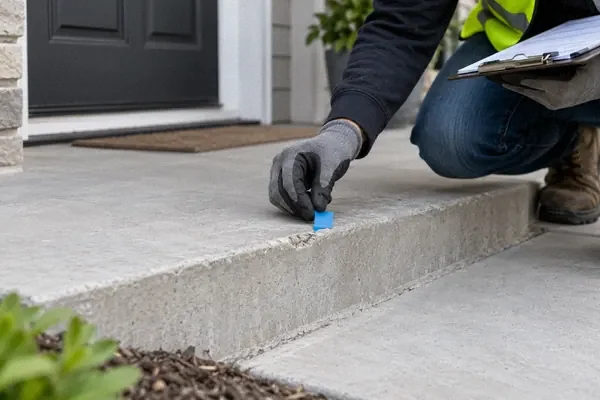
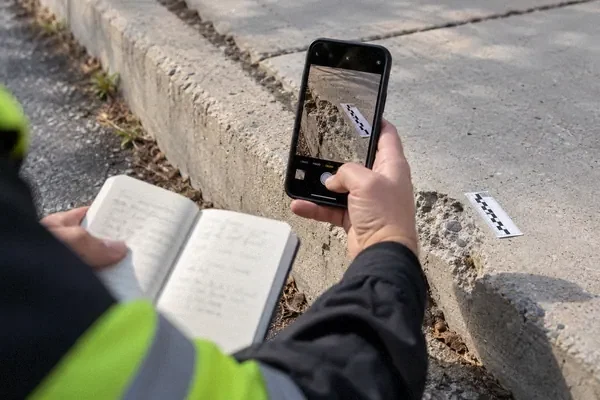
If you observe a problem, record its location, date and appearance. Notify the contracting party through the agreed channel and ask for an assessment. Identify the relevant contract requirement if you can, but do not guess which worker caused the condition.
A Reddit post about a questionable pour after subcontracting generated conflicting opinions from photographs. The post cannot establish responsibility or structural adequacy. It does demonstrate why the owner needs a project contact who can arrange an on-site, evidence-based review.
Ask the contractor to state the proposed next action and who will perform it. If the concern involves structural work, the proper review may require the design professional. If it involves a finish selection, the approved sample and written scope may be more relevant than a broad debate about concrete quality.
Hypothetical example: the pool company's concrete crew
Suppose a homeowner contracts with a pool company for a project that includes a concrete deck. The pool company brings in a separate concrete crew. After placement, the owner questions a border location and asks the crew leader for a discount.
The crew leader cannot authorize a change to the pool company's agreement. The owner instead sends the marked photograph and approved layout to the pool project manager. The manager arranges a walkthrough and provides a written response addressing the disputed detail.
This sequence does not determine whether the deck was defective or whether a credit is owed. It ensures that the concern reaches the party capable of responding under the owner's contract and that any resolution becomes part of the correct project record.
Keep payments and changes with the right agreement
Be cautious if someone on site requests direct payment for work already included in the main contract. Ask the contracting party to explain the arrangement before paying. A direct payment may be legitimate, but it needs a clear record of how it affects the balance and responsibilities.
California's CSLB contract guide discusses subcontractor and supplier payment concerns. Its lien and payment procedures are California-specific. Owners elsewhere should obtain advice applicable to their state rather than copy a release form or payment practice from a different jurisdiction.
Do not sign a separate agreement casually because a crew says it will be faster. A second contract can alter who is responsible for the extra work, cleanup, warranty and coordination. Read it as a new commitment and compare it with the original scope.
Check credentials for the actual work
Florida's DBPR hiring guidance directs owners to verify relevant state and local requirements. Do not assume that the existence of one licensed company answers every scope or crew question. Ask the appropriate authority when the arrangement is unclear.
Insurance questions should identify the activity and company involved. A certificate from the main contractor does not explain every possible subcontractor coverage issue. If that distinction matters to your project, ask the insurance contact or your adviser to clarify it before work begins.
Does subcontracting automatically reduce the quality of a concrete job?
No. Evaluate the actual crew's relevant work, supervision and adherence to the project documents. The arrangement itself does not prove either poor workmanship or competent execution.
Who should receive my written complaint?
Start with the party named in your contract and follow its notice provisions. Include other relevant contacts as appropriate, but do not rely solely on a conversation with a worker who may lack authority to resolve it.
Before the next site visit, obtain a simple responsibility map. It should tell you who performs the work, who can approve a change and who will provide a documented response if something goes wrong.
Research references
- primary · full
FTC: How To Avoid a Home Improvement Scam - primary · full
CSLB: Terms of Agreement - primary · full
DBPR: Hiring Licensed Contractors - reddit · search-excerpt
Bad pour. - reddit · search-excerpt
Update: being offered a credit