- Identify covered conditions
- Read exclusions and notice
- Confirm the promised remedy
Reddit discussions identify questions; technical guidance comes from the linked primary sources. This article is not a site inspection or an engineered specification. How we research.
Start with the written promise
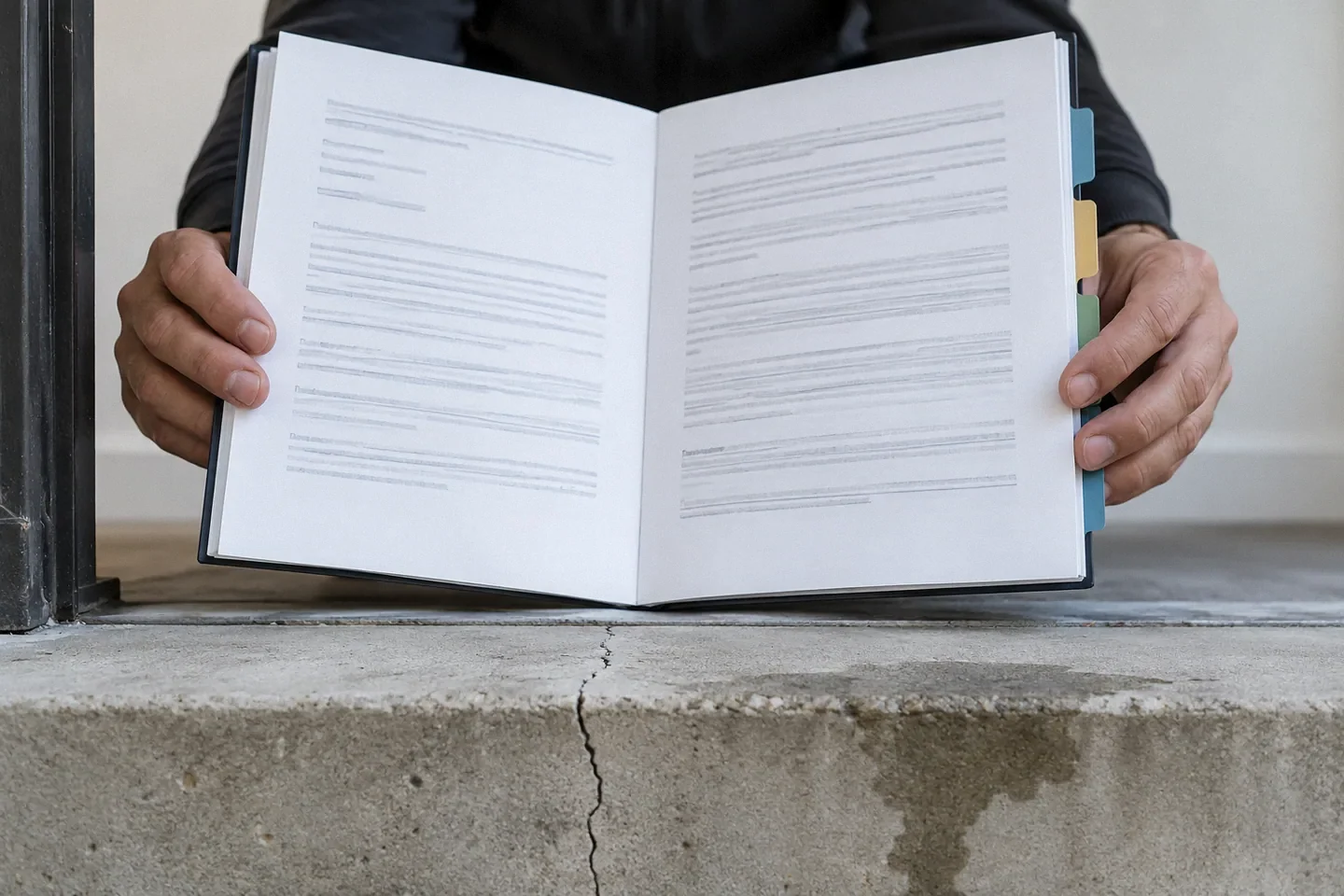
Request the warranty before selecting the contractor, not after a concern appears. Identify the company making the promise, the project covered, the start of the term and the person or address for notice. Keep the warranty with the signed scope and any product information.
Ask whether the promise comes from the installer, a material manufacturer or another party. A product warranty may address a product issue without paying for every part of removal and replacement. An installer warranty may address workmanship while referring product claims elsewhere. Read the actual terms rather than assuming these promises are interchangeable.
California's CSLB contract guide recommends written warranty details. The following reading method is practical guidance, not a statement that every jurisdiction requires the same coverage.
Ask what the covered condition means
“Cracks covered” can be ambiguous. Does the document identify which observations trigger review, who evaluates them and what remedy applies? An owner should not invent a universal acceptable crack width from an internet comment. The project requirements and a qualified assessment may be needed to determine significance.
Similarly, “drainage covered” needs context. Ask which area, intended water path and agreed design the warranty addresses. A promise about the placed slab may not resolve a separate site grading or roof-discharge issue. Those boundaries should be discussed during scope development, not discovered during a claim.
A Reddit question about stamped-patio warranties attracted widely different answers. Another discussion about one-year coverage shows similar disagreement. These are examples of market confusion, not evidence that one exclusion is universally valid or one warranty is standard.
Read exclusions as questions about responsibility
Look for exclusions involving maintenance, chemicals, vehicles, third-party work, drainage changes or environmental exposure. Ask what owner action is required and where that instruction is documented. If the warranty depends on following a care plan, obtain the plan before accepting the job.
An exclusion does not itself diagnose the cause of a later condition. If a contractor says damage falls under an exclusion, ask for the factual basis. The owner should likewise avoid assuming that every condition appearing during the term automatically proves covered workmanship failure.
When a clause is broad enough to appear to exclude nearly everything the owner expects, discuss it before signing. The useful outcome may be a clearer scope, a different warranty or a decision not to proceed. A verbal reassurance should not be relied on to erase contradictory written language.
A warranty review table
| Provision | Question to ask |
|---|---|
| Covered work | Which slab areas and operations does this warranty include? |
| Trigger | What condition should prompt a claim or assessment? |
| Exclusions | What facts would place the condition outside coverage? |
| Notice | How and when must the owner report the concern? |
| Remedy | Repair, replacement, refund or another defined response? |
| Related costs | Are access, removal, restoration and matching addressed? |
Also ask about transfer if you expect to sell the property. Do not promise a buyer that a warranty transfers merely because it is still within its stated term. Obtain the applicable provision and any required transfer procedure from the issuing party.
Hypothetical example: the word “cracks” is not enough
Suppose a contractor advertises a workmanship warranty and tells an owner that cracks are “taken care of.” The written document does not explain whether that means assessment, filling, section replacement or a credit. Before signing, the owner asks for the process and remedy to be clarified.
The contractor explains that concerns are inspected and that any covered remedy depends on the documented condition. The owner asks that this explanation and any exclusions be attached to the agreement. The promise is now more useful, even if it is less sweeping than the advertising phrase suggested.
If the contractor instead refuses to provide written terms, the owner has learned something material before paying. The issue is not that every warranty must promise replacement. It is that the owner needs to understand the actual commitment being purchased.
Keep routine care records when maintenance is a stated condition of coverage. Record the product and date of any authorized treatment, and retain its instructions. That information can help distinguish an actual maintenance question from an unsupported explanation offered after a problem appears.
Make a claim with observations and records
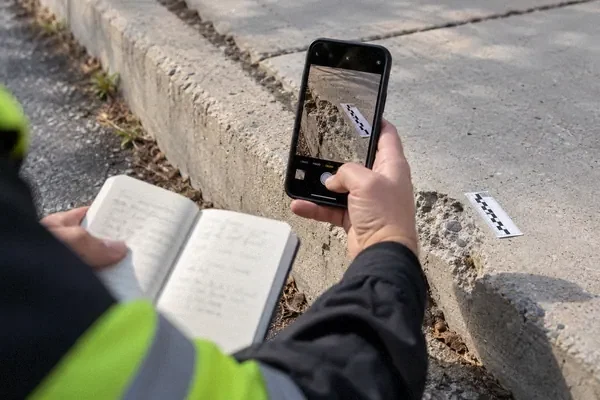
When a concern appears, note the date, location, photographs and any change over time. Follow the warranty's notice process and retain delivery evidence. Describe the symptom without guessing a cause: “surface material is coming loose in the marked area” is more precise than an unsupported accusation about the mix.
Ask for an assessment date and written response. If the contractor proposes a repair, request the method, expected appearance and effect on the remaining warranty. Keep any disagreement about cause separate from the factual record of what was observed.
The FTC's dispute guidance provides a general consumer reference for documenting communication. It does not establish your warranty's coverage or guarantee a particular legal remedy.
Does a one-year warranty mean every issue after one year is the owner's responsibility?
Do not infer that from the stated term alone. Other contract or legal questions may exist, and their scope depends on the jurisdiction and facts; seek local advice for a significant disputed condition.
Does a warranty replace the need for a proper specification?
No. The intended work should still be defined before construction. A warranty is a response to covered problems, not a substitute for agreeing on the slab's use, design, finish and completion requirements.
Read the warranty as a sequence: covered condition, notice, assessment and remedy. If any part is unclear, obtain the answer in writing before relying on the promise.
Research references
- primary · full
FTC: How To Avoid a Home Improvement Scam - primary · full
CSLB: Terms of Agreement - reddit · search-excerpt
Warranties? - reddit · search-excerpt
One year warranty