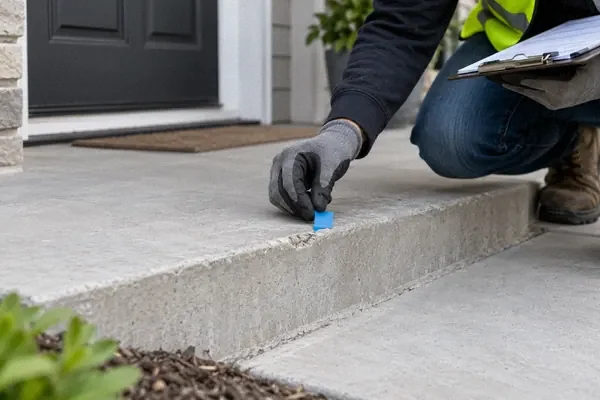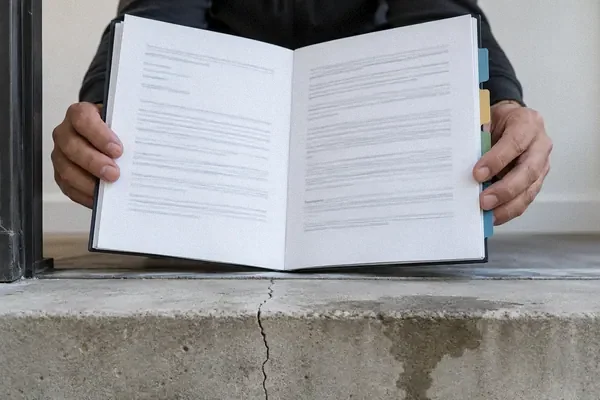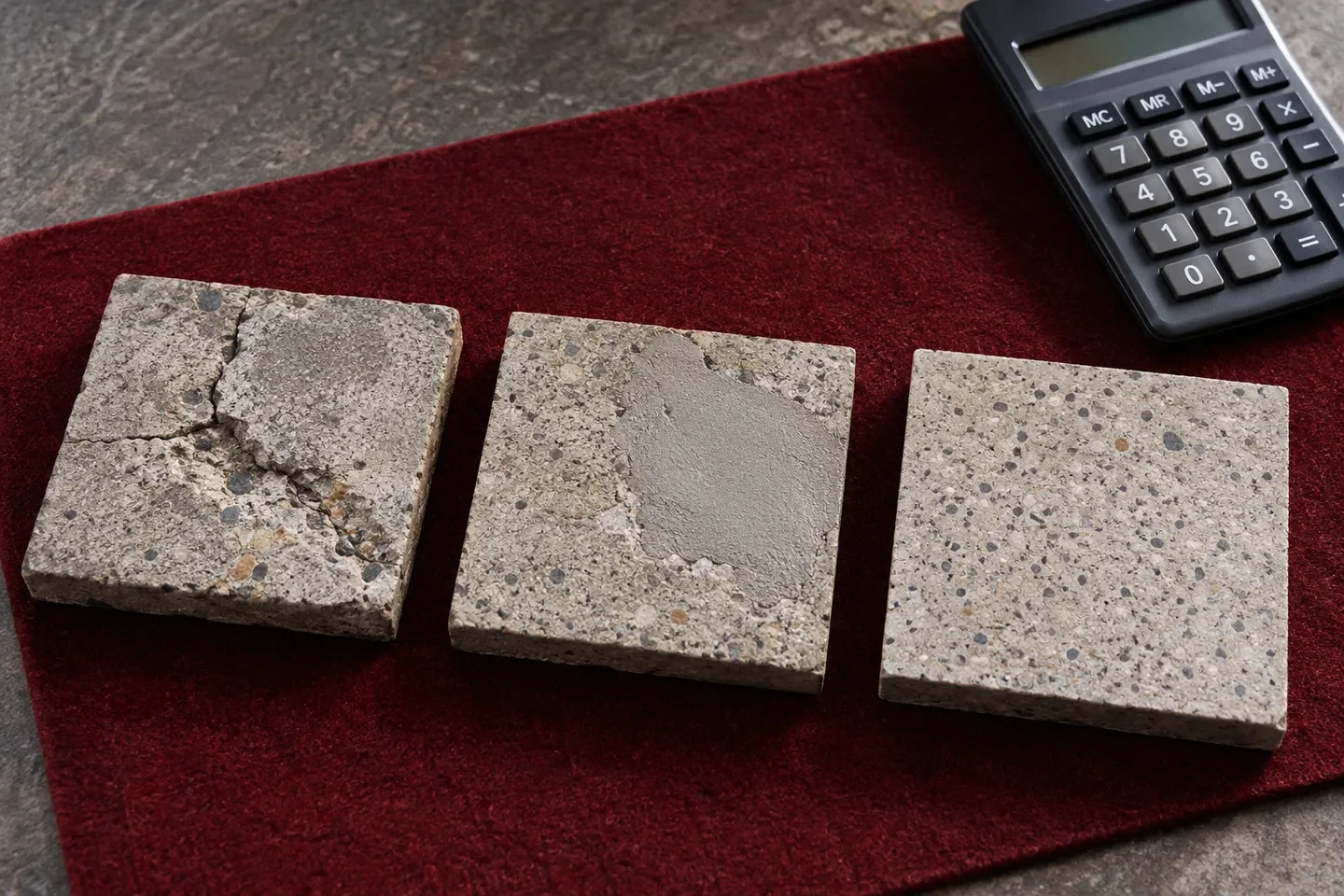
- Establish the actual problem
- Compare complete remedies
- Read the settlement terms
Reddit discussions identify questions; technical guidance comes from the linked primary sources. This article is not a site inspection or an engineered specification. How we research.
Diagnose the decision before choosing the remedy
Start by separating an appearance concern, an incomplete contract item and a possible performance or structural issue. They may require different evidence. A disputed border color calls for the approved selection and an appearance review; suspected loss of support may require a qualified technical assessment.
A photograph can document a condition but may not establish its cause or consequence. Ask the contractor to explain the basis for the proposed remedy and identify when an independent professional is appropriate. Do not let an immediate discount replace investigation of a potentially significant problem.
A Reddit homeowner's discussion of a credit offer shows the commercial decision clearly. The post cannot tell another owner whether to accept a credit. It raises the useful question of whether the offered money compensates for the actual unresolved condition.
Require a complete repair description
A repair proposal should identify the locations, preparation, product or method, expected appearance, access restrictions and completion process. Ask what it is intended to accomplish and what limitation remains. An owner should not have to infer whether “patch” means a cosmetic treatment or a professionally designed corrective operation.
If compatibility with an existing coating or finish matters, ask for the relevant manufacturer information. If the work involves a structural element, the repair should follow the appropriate design and approval process. A general article cannot select a repair method for an uninspected structure.
Discuss the visible result honestly. A local repair may remain distinguishable, while replacement can also create transitions between different placements. Neither outcome should be promised away without a realistic basis. Where appearance drives the decision, a representative sample can be more useful than a verbal assurance.
Compare more than the immediate price
| Option | Questions to resolve before acceptance |
|---|---|
| Local repair | What condition is addressed, and what remains visible or uncertain? |
| Section replacement | What boundaries, adjoining work and restoration are included? |
| Monetary credit | What responsibility and future cost remain with the owner? |
| Further assessment | What unanswered question will the assessment resolve? |
Include related costs such as access, restoration and temporary loss of use in the discussion. Do not invent a repair price from a photograph or assume the contractor's credit equals the actual cost of correction. If the owner may later hire someone else, obtain a defined independent proposal rather than a casual verbal estimate.
Understand what the credit means
A credit can be a price adjustment while the warranty remains unchanged, or it can be part of a settlement that resolves specified claims. Those are materially different arrangements. Ask the contractor to state the intended effect in writing and read the proposed document carefully.
Avoid assuming that an email saying “I still expect the warranty” overrides a signed release. Conversely, do not assume that every credit waives every future concern. The wording and governing law matter. Significant settlement questions deserve local legal review before signature.
The FTC's home improvement guidance supports documenting contractor disputes. Your comparison of remedies should become part of that record, including what each party offered and what remains unresolved.
Hypothetical example: an appearance issue and a drainage concern
Suppose an owner dislikes a visible finish transition and also reports water collecting near an entry. The contractor offers one credit covering “all concrete concerns.” The owner first asks whether the proposed amount addresses appearance only or also assumes acceptance of the water issue.
The parties agree to evaluate drainage separately. They then discuss a finish mockup, section replacement and an appearance credit with defined terms. The owner can make a preference decision about the finish while still obtaining the necessary assessment of the other concern.
This separation prevents a relatively small cosmetic negotiation from accidentally becoming the final resolution of a more consequential issue. It also gives the contractor a clearer opportunity to respond to each concern on its merits.
Preserve evidence before corrective work
Photograph the current condition and retain the original contract, approved drawings and communications. If an independent assessment is needed, arrange it before the proposed repair changes the evidence when practical. Necessary safety measures should not be delayed solely to preserve a dispute; document those measures and obtain qualified advice.
Keep samples or removed material only when a relevant professional says doing so is useful and safe. An owner should not cut cores, disturb reinforcement or open structural work to create evidence. The investigation should have a defined purpose and responsible professional.
For California, CSLB distinguishes regulatory complaints from guaranteed restitution. A pending or potential board complaint does not tell you the financial value of a settlement. Florida and other states have different processes that must be assessed separately.
Record the accepted result
If you agree on a remedy, identify who performs it, the included scope, target schedule, payment adjustment and applicable warranty terms. State how completion will be evaluated. A settlement that merely says “contractor will fix concrete” can create a second dispute about the fix.
After completion, document the result and any remaining agreed limitation. Retain the original evidence alongside the repair record. That history can matter for later maintenance, warranty questions and a future property transaction.
Is a credit always worse than replacement?
No. For a well-understood appearance issue, an owner may reasonably prefer a credit. It is a poor substitute for assessment when the condition's safety, performance or future cost remains unknown.
Can I choose my own repair contractor and deduct the cost?
Do not assume you can do that without consequences. Review notice, repair-opportunity and payment provisions with a local adviser before commissioning disputed replacement work and treating the bill as an automatic offset.
Choose the remedy only after the problem and remaining risk are clear. A good agreement describes the result you will receive, not merely the amount of money that changes hands.
Research references
- primary · full
FTC: How To Avoid a Home Improvement Scam - primary · full
CSLB: Filing a Construction Complaint - reddit · search-excerpt
Am I being scammed? Was told this was a $9,500 job to replace and strengthen - reddit · search-excerpt
Update: being offered a credit