- Measure narrowest clear passage
- Show placement details to supplier
- Trial the actual form and mixture
Reddit discussions identify questions; technical guidance comes from the linked primary sources. This article is not a site inspection or an engineered specification. How we research.
Large stones in a concrete bag can look alarming when the project has a narrow edge or detailed form. The concern is reasonable, but the solution is not automatically to remove the stones. The mixture needs to suit the geometry and placing method as a whole.
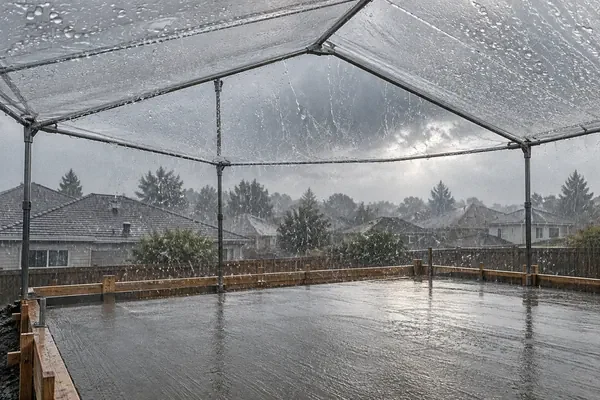
A Reddit owner casting concrete raised beds worried that the available bagged mixes would not produce a clean finish. The important distinction is between an unsuitable clearance and a surface-appearance concern. They may need different solutions.
Find the narrowest route, not just the broadest area
Measure the actual spaces through which concrete must pass. Reinforcement, inserts, corners, and changes in section can create restrictions that are not obvious from the overall dimensions.
A form may be wide at the top yet contain a narrow passage below. Show the supplier a section or photograph that explains the complete arrangement.
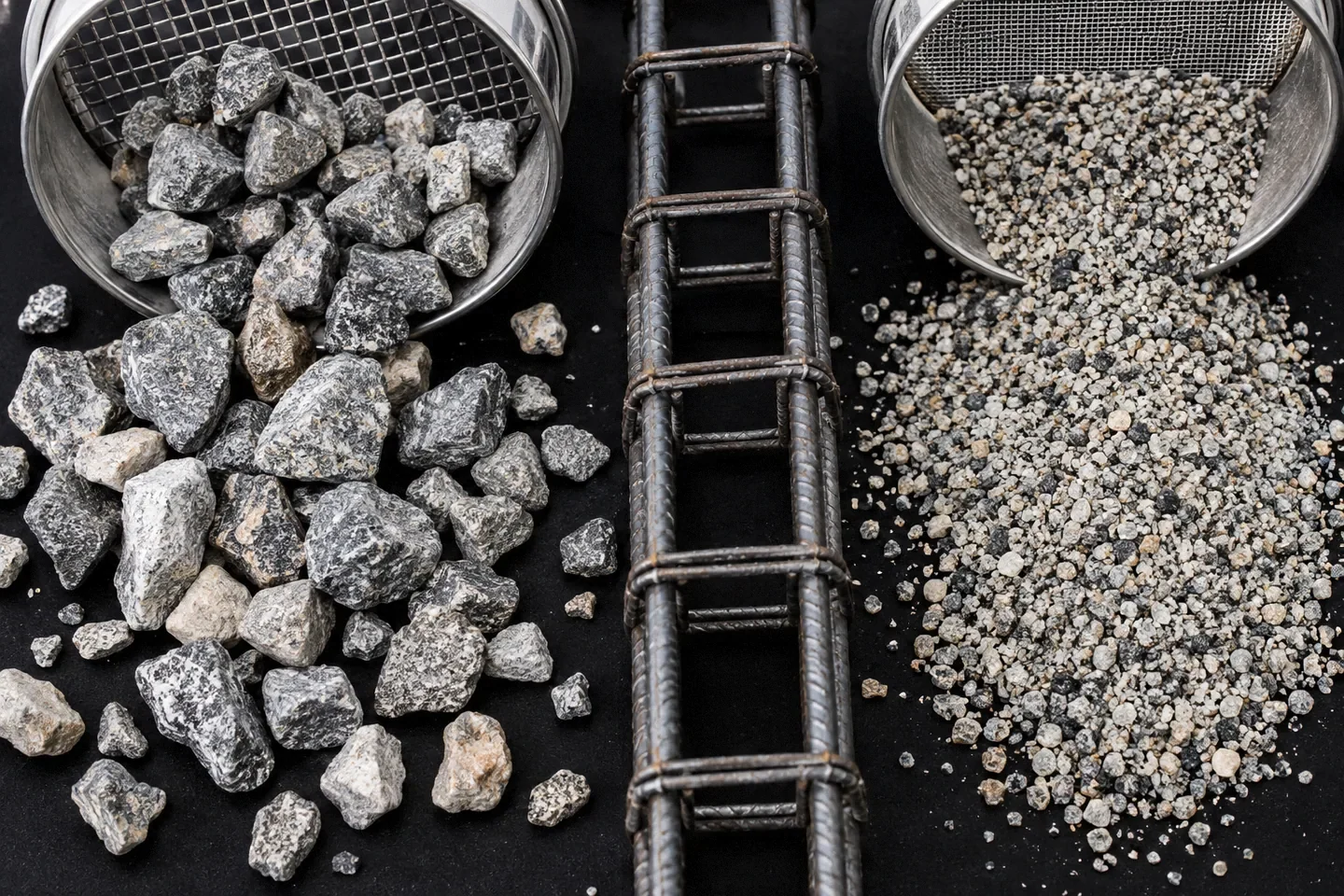
NRMCA's ordering guide links aggregate size to the section and clear spaces around forms and reinforcement. Use that relationship to frame a specific question rather than ordering “small stone” without context.
Describe the placing method
A mixture placed directly into an open form faces different conditions from one moved through a pump or around congested details. The supplier needs to understand that route.
Tell the installer and producer how far the material travels and what equipment will be used. If the access method changes, revisit mixture suitability instead of assuming the original order remains ideal.
Do not choose aggregate solely to make one part of the process easier. The resulting mixture must still meet the project's performance and finish requirements.
Separate aggregate visibility from surface smoothness
Seeing coarse particles in fresh concrete does not prove the finished face must show them. Form material, placement, consolidation, and finishing also contribute to appearance.
If the project calls for a particular architectural face, use a representative sample. A small trial can show whether the concern is actually aggregate clearance, an imperfect form joint, or a process issue.
Do not add extra cement simply because the fresh mixture looks too rocky. That changes the product without directly identifying the cause of the concern.
A hypothetical thin casting
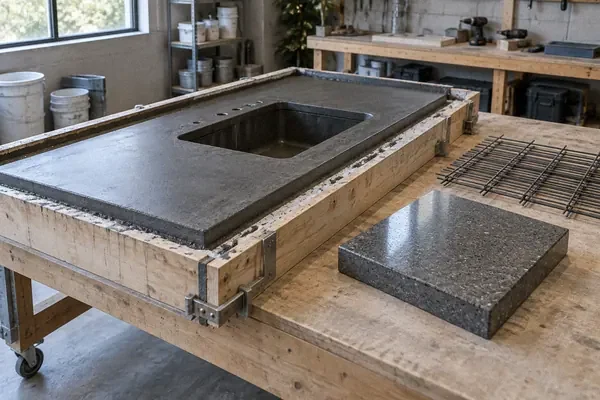
Suppose an owner designs a thin outdoor counter with a narrow strip beside a sink opening. They select an ordinary bagged mixture based on a high strength number.
Before casting, the team reviews the smallest section and reinforcement clearances. They discover that the geometry needs a product and placing process intended for that kind of detail.
A purpose-designed countertop mixture may be appropriate, but its instructions and the support design still need review. QUIKRETE's countertop product information illustrates that specialized applications can involve a deliberately formulated mixture rather than a modified general-purpose bag.
The example does not establish a safe countertop thickness. It shows why the narrow detail, not the largest field area, can drive material selection.
Bring the supplier a useful description
| Information | Why it matters |
|---|---|
| Minimum section | Identifies the physical casting constraint |
| Reinforcement spacing | Shows the clear paths available |
| Inserts and openings | Reveals localized restrictions |
| Placement equipment | Identifies handling requirements |
| Intended finish | Clarifies whether appearance is a major criterion |
| Written specification | Preserves the project's performance requirements |
| Sample plan | Provides a way to confirm constructability |
A simple dimensioned sketch often communicates these facts better than a long verbal description.
Avoid rebuilding a packaged mix casually
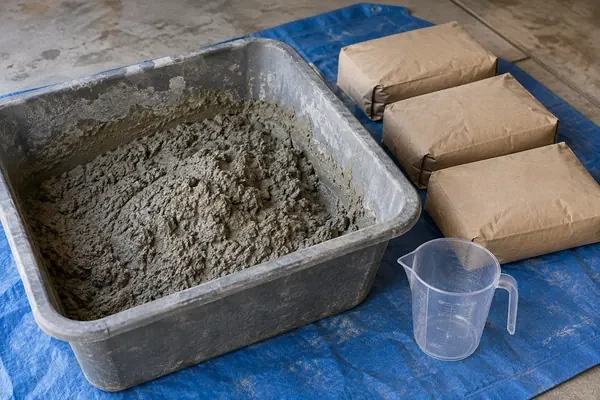
Removing aggregate, adding sand, or adding cement changes the mixture's proportions. The original bag's water instructions and stated properties should not be treated as a complete description of that modified material.
If a different aggregate size is needed, ask for a suitable documented product or designed mixture. The goal is not to preserve the purchase at any cost.
The same principle applies to combining different bags. A mixture of two convenient products is not automatically equivalent to a product manufactured for the intended application.
Check consolidation and access together
Even a suitable aggregate selection needs a credible placement and consolidation method. Ask whether the crew can reach the restricted areas with the appropriate tools.
Do not use excessive vibration as an assumed cure for every clearance problem. If the geometry or mixture is unsuitable, more working may not create a reliable result.
A trial should use the actual form details and planned method. Testing only an open bucket of material says little about a narrow corner behind reinforcement.
Let appearance requirements influence the sample
For a concealed footing, a decorative sample may be unnecessary. For a visible counter edge or formed wall face, it can be central to the decision.
Include the form treatment, color, and intended surface condition in the trial. Review the result after the relevant curing and finishing process, not only while it is wet.
Record the materials and procedure. A successful sample is valuable because it can be repeated; changing ingredients afterward reduces that value.
Confirm the final order after details settle
Aggregate selection should follow the final geometry and placing plan. If reinforcement, openings, or access changes, tell the supplier.
Keep the mixture identification and approved details with the project records. They explain what was intended without making unsupported claims about the completed element.
The practical next step is to measure the narrowest passage and show it to the supplier. Choose a compatible mixture and process rather than trying to make an unsuitable bag behave differently.
Frequently asked questions
Is smaller stone always the safest choice?
No. Evaluate the complete mixture and application. One ingredient cannot determine every required property.
Can I remove stones from a bagged mix?
Do not assume the modified product retains the original documented behavior. Select a suitable product or obtain appropriate mixture guidance.
Research references
- primary · full
NRMCA CIP 31 Ordering Ready Mixed Concrete - primary · search-excerpt
QUIKRETE Countertop Mix Current Product Page - reddit · search-excerpt
What kind of bag mix for this look?