- Identify the complete color system
- Approve an actual finished sample
- Keep production materials consistent
Reddit discussions identify questions; technical guidance comes from the linked primary sources. This article is not a site inspection or an engineered specification. How we research.
A stamped patio can involve several coloring products, and their names are often mixed together in conversation. The owner asks for a brown finish, the contractor mentions integral pigment, and a helper calls the release powder “the color.” A clear specification needs to separate those roles.
A Reddit owner choosing between integral color and color hardener asked which was best before a stamped patio pour. That is the right time to ask. Once material is placed, changing the color system is a different and more constrained task.
Identify where the color is introduced
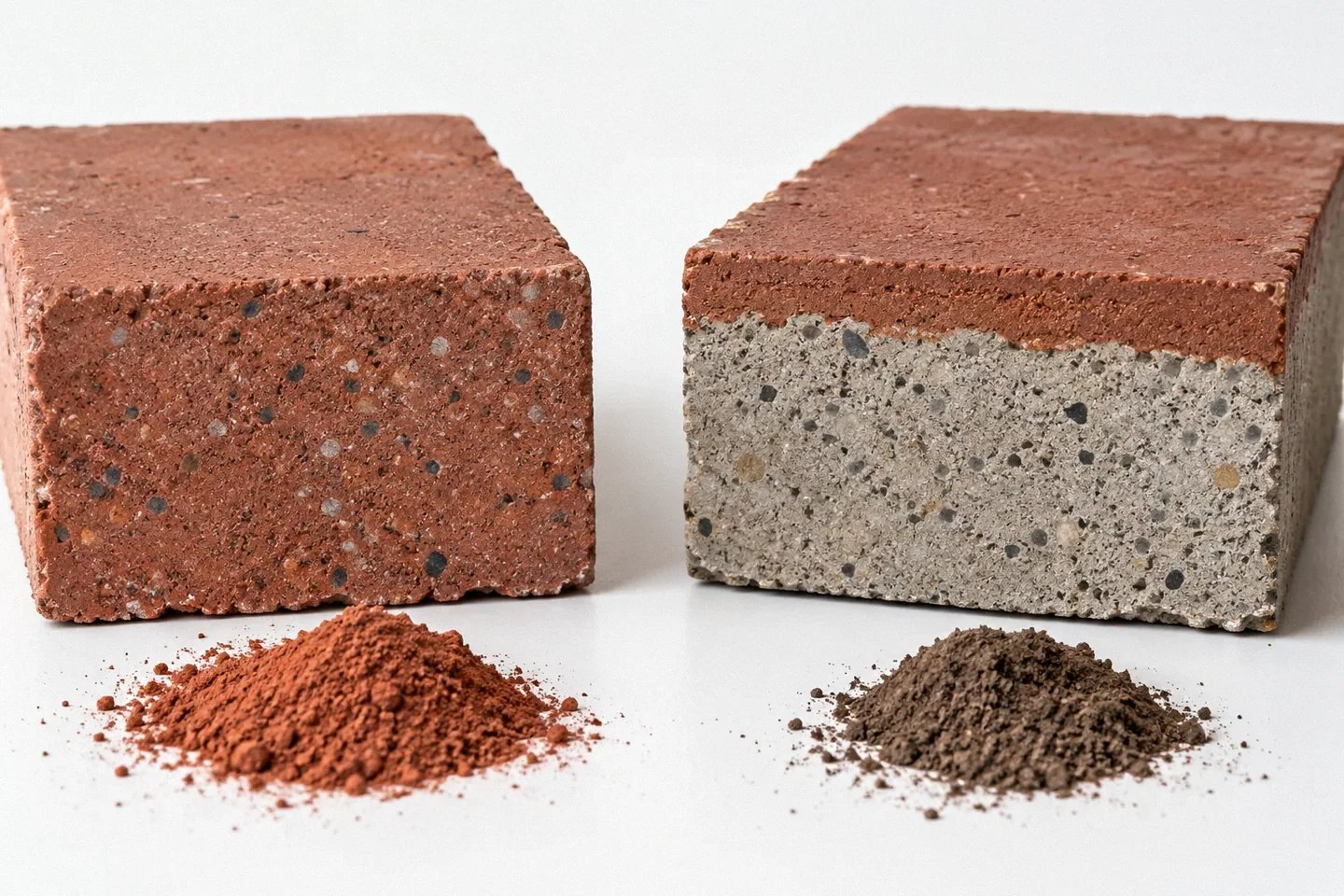
Integral pigment is mixed into the concrete. A color-hardener system is applied to the surface according to its documented method. Those are different processes, not two interchangeable ways to add an unspecified powder.
Davis Colors' product specifications describe integral pigments and their through-mixture role. Sika's decorative guidance places coloring and release products within a complete stamping system.
Ask the installer to name every proposed product. A quote saying only “colored concrete” does not establish how the base color, accents, and final protection will be produced.
Separate the release from the base color
A release product helps the stamping process and may contribute accent color, depending on the system. It should not be confused with the principal color treatment.
This matters when reviewing a sample. The apparent depth and contrast may come from more than one product. Reproducing only the base pigment will not necessarily reproduce the whole appearance.
Ask the contractor to show which parts of the sample result from the mixture, surface treatment, release, and final sealer or protective product. You do not need a chemistry lesson; you need a complete list and a reproducible process.
Compare systems rather than slogans
Integral color may appeal because it is distributed through the mixture. A surface system may offer a particular appearance or other documented properties. Neither observation alone decides every project.
Discuss mixture compatibility, exposure, finishing process, and the installer's experience with the specific system. Do not assume one method universally resists every kind of wear or produces every desired shade.
If a bid proposes a substitution, ask whether the approved sample and process still apply. Changing the product category is more significant than changing a label on the invoice.
A hypothetical two-tone patio
Suppose an owner wants a warm field color with a charcoal border. The contractor proposes one integral mixture for the entire pour and a different surface treatment at the border.
The plan needs more than two color names. It should show where the treatments meet, how the sequence prevents unintended mixing, and how the completed appearance will be sampled.
The owner approves a representative panel that includes the border transition, stamping, release, and final treatment. A small plain pigment chip would not have answered the same questions.
This example does not endorse a particular combination. It illustrates how a combined design requires a combined sample and documented application method.
Do not finalize color from a digital image
Lighting, camera settings, screens, and wetness change perceived color. Use online images to narrow preferences, then move to an appropriate physical reference.
Davis Colors' literature page cautions against using a downloaded color chart as the final selection and points toward physical references or a jobsite test. That is a useful boundary for any appearance-sensitive project.
Review the sample under conditions relevant to the patio. Also confirm whether it includes the final treatment, because an unfinished sample may not represent the completed system.
Put the color agreement in writing
| Item | What to record |
|---|---|
| Base system | Integral pigment or named surface system |
| Product and color | Exact identification rather than a casual nickname |
| Accent or release | Product and intended contribution |
| Sample | The physical reference approved |
| Border layout | Locations and transitions |
| Final treatment | Product affecting the completed appearance |
| Variation expectations | What the sample can and cannot establish |
Keep the record accessible to the production crew. A sample approved with the salesperson is less useful if the installer receives only “light brown.”
Maintain consistency during production
Material sources, water control, batching, and finishing practices can influence color. Davis Colors' application guidance specifically addresses consistency and warns against treating integral pigments as a casual surface broadcast.
Ask how the contractor and producer will maintain the approved system across loads or separate placements. Do not assume a matching color name compensates for changes elsewhere in the process.
If site conditions require a proposed change, discuss its appearance implications before proceeding. The objective is not to prohibit every adjustment, but to keep the approved system and actual work connected.
Discuss future care without promising invisibility
Retain product names and care instructions for the finished surface. Future cleaning or maintenance should be compatible with that system.
Do not promise that repairs will be invisible simply because color extends through the mixture. Texture, age, materials, and treatment can still differ. Likewise, do not assume a surface color system is automatically unsuitable because it is not integral.
The purchasing decision should rest on the actual products, appearance, application plan, and maintenance expectations rather than categorical claims.
Approve the complete appearance before pouring
The best next step is to ask for a product list and a sample that includes all visible treatments. Confirm the field, borders, release, and final protection together.
That turns a vague color preference into a reviewable construction target. It also makes later questions easier to discuss because everyone knows what was actually selected.
Frequently asked questions
Is colored release the same as the base color?
No. Identify both products and their separate roles in the stamping system.
Can the final shade be chosen from a phone image?
Use it only as a starting reference. Approve an appropriate physical sample representing the actual completed system.
Research references
- primary · search-excerpt
Davis Colors Integral Color Specifications - primary · search-excerpt
Sika Patterns and Textures - primary · search-excerpt
Davis Colors Product Literature - primary · search-excerpt
Davis Colors How-To Information - reddit · search-excerpt
Integral color or color hardener for stamped?